
How to Add Event Listening Access
If your audience keeps leaning in, missing key points, or drifting away when the room gets loud, the problem usually is not the content. It is the delivery. Knowing how to add event listening access means giving attendees a direct, controlled way to hear what matters without fighting venue noise, distance, or overlapping sound.
For conference planners, trade show producers, and brand activation teams, this is often the difference between a presentation that lands and one that gets lost in the room. Standard PA coverage can help in some spaces, but it does not solve every communication problem. In busy environments, event listening access gives you more control over who hears what, where, and how clearly.
What event listening access actually means
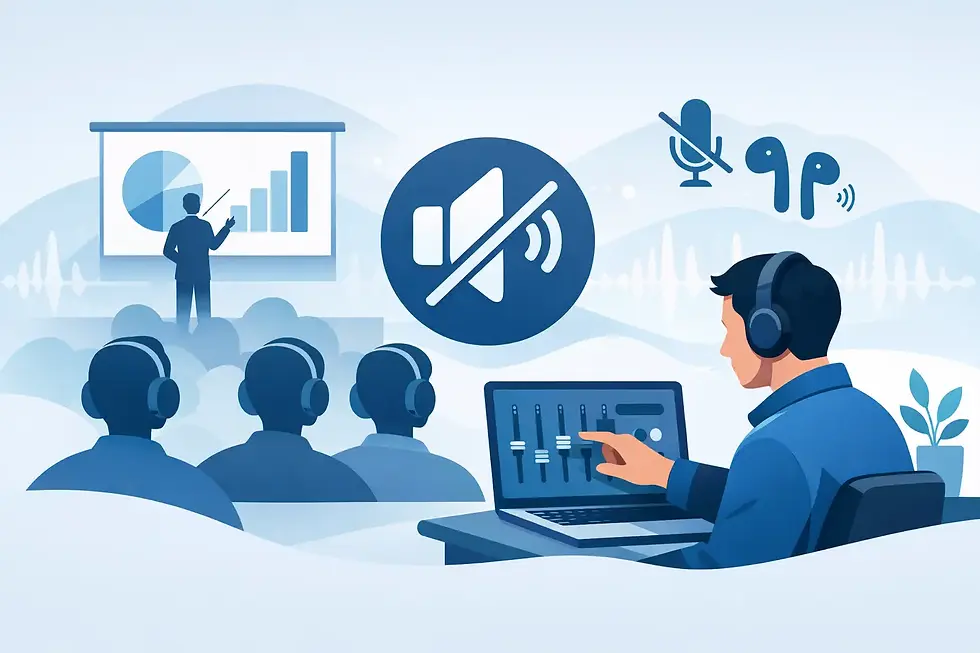
Event listening access is any audio setup that lets attendees receive program audio directly instead of relying only on open-air speakers. That can include wireless headsets, assisted listening receivers, language interpretation channels, or closed-circuit audio feeds designed for a specific audience zone.
The goal is straightforward. Cut through the noise. Make speech easier to follow. Reduce sound bleed between nearby presentations. Support accessibility requirements. Give presenters a better chance of being heard clearly, even in rooms that are working against them.
This matters most in trade shows, general sessions with breakout areas, retail activations, plant tours, sporting events, and multilingual programs. In those settings, loud ambient sound and competing audio sources can make even a strong presenter sound ineffective.
How to add event listening access without overbuilding
The first step in how to add event listening access is not choosing gear. It is defining the listening problem. Some events need accessibility support for a small portion of the audience. Others need every attendee on a headset because the venue is too loud for traditional reinforcement. Some need two presenters speaking side by side without interfering with each other.
When planners skip this step, they either overspend on a system that is larger than necessary or underspecify a setup that leaves attendees straining to hear. A clean plan starts with four questions: who needs the audio, what do they need to hear, where will they be standing or seated, and what noise or interference will compete with the message.
If your audience is concentrated in one room and the issue is hearing clarity at a distance, assisted listening may be the right fit. If your event has multiple nearby presentations, closed-circuit wireless audio often makes more sense. If you are managing a multilingual audience, separate language channels become part of the access plan from the start.
Start with the event environment
Venue conditions shape the right solution more than most planners expect. A carpeted ballroom with controlled attendance behaves very differently from a concrete expo hall or an outdoor promotional event. Ceiling height, reflective surfaces, nearby exhibitors, and crowd movement all affect intelligibility.
That is why event listening access should be designed around the space, not added as an afterthought. In a trade show booth, open speakers can pull in passersby, but they also compete with every neighboring booth. In that case, wireless listener headsets can create a focused presentation area without raising the room volume. In a breakout room next to another session, direct audio helps prevent message overlap and listener fatigue.
It also helps to think operationally. How will devices be distributed? Will attendees keep them for the whole program or return them after a session? Do you need staff support at check-in? How fast do channels need to change between presentations? These details matter because the best audio system on paper can still create friction if the logistics are clumsy.
Match the format to the audience
Not every audience wants to interact with audio the same way. A seated conference crowd may accept a receiver-and-headset model without hesitation. A retail activation audience may need something faster and more casual. A VIP tour or factory walkthrough may need lightweight wireless units that move easily with the group.
That is where customization matters. The right listening access setup should feel easy for attendees, not like extra work. If it takes too long to explain or distribute, adoption drops. If the earpiece is uncomfortable or the instructions are unclear, people stop using it. Good event audio planning is not just about signal quality. It is about audience behavior.
For accessibility, the system also needs to support attendees with hearing challenges in a way that is dependable and discreet. In many cases, that means offering dedicated assisted listening options alongside the main event audio plan. If interpretation is part of the event, listeners need a simple way to choose the correct language channel without confusion.
Common ways to add event listening access
There are several practical ways to add event listening access, and the right one depends on your program design.
Wireless headset systems work well for trade shows, silent seminars, outdoor events, fitness activations, and any environment with high ambient noise. They create a direct line from presenter to attendee and let multiple sessions happen near each other.
Assisted listening systems are often used in conferences, houses of worship, public venues, and corporate meetings where accessibility is a priority. These systems help attendees hear spoken content more clearly without changing the entire room setup.
Multichannel listening systems support interpretation, multi-track programming, and side-by-side sessions. They are especially useful when different audience groups need different content in the same footprint.
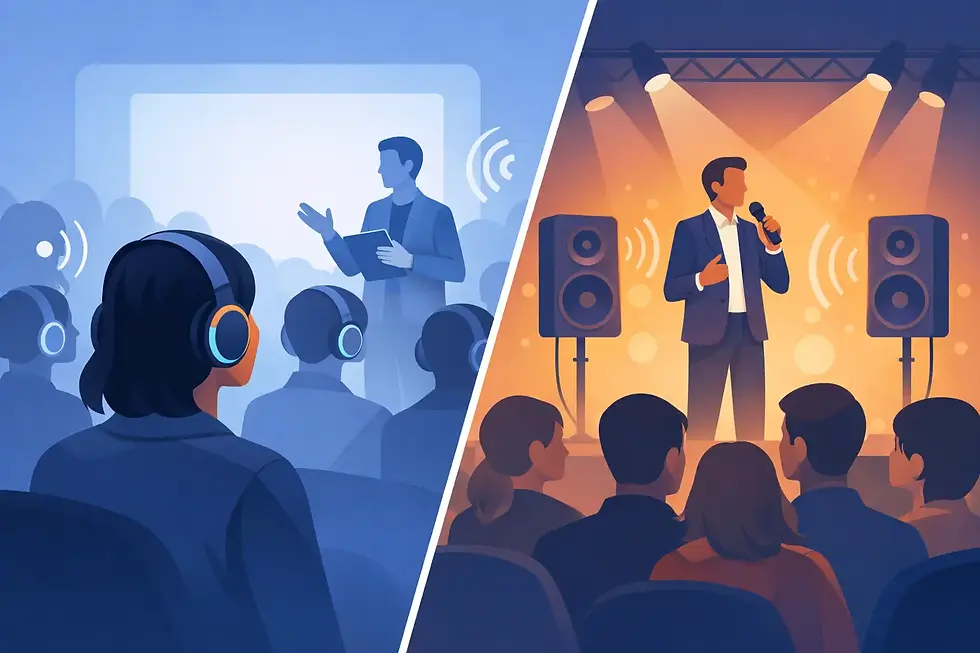
Hybrid setups are common too. You may use a public address system for general atmosphere and pair it with direct listening devices for attendees who need better clarity. That approach works well when you want energy in the room but still need precise message delivery.
Plan for the presenter experience too
Event listening access is often discussed from the attendee side, but presenters feel the impact immediately. When they know the audience can hear clearly, they do not need to overproject, repeat themselves, or compete with venue noise. That changes pacing, confidence, and overall delivery.
A good system also supports reliable microphone handoff, stable channel management, and clean monitoring. If presenters are moving, sharing the stage, or working in rotating sessions, the audio plan should account for that. The more complex the event flow, the more important it is to have a setup that is simple to operate in real time.
This is one reason many planners choose a managed solution instead of piecing together equipment on their own. Audio access is not only about having transmitters and receivers. It is about making sure those components are matched correctly, tested in the venue, and supported throughout the event.
Where planners get it wrong
The most common mistake is assuming louder is better. In reality, louder often creates more fatigue, more bleed, and more complaints. Direct listening access solves a different problem than room volume. It improves intelligibility by shortening the path between speaker and listener.
Another mistake is waiting too long. If listening access comes up after floor plans, stage positions, and power layouts are already locked, your options narrow. You can still add a workable solution, but it may not be the best or most efficient one.
Planners also underestimate quantity. If a session is expected to draw 150 people and only 40 listening units are available, you create an inconsistent audience experience. On the other hand, not every event needs full audience deployment. It depends on format, traffic flow, and whether listening access is the core delivery method or a supporting layer.
How to choose the right support partner
If you are evaluating how to add event listening access, look for a provider that asks operational questions, not just technical ones. They should want to know about audience movement, venue noise, accessibility goals, content type, and staffing needs. That tells you they are planning for outcomes, not just equipment rental.
You also want flexibility. A conference breakout setup is different from a sports event sideline activation or a retail promotion. The best partner will build around your event, explain trade-offs clearly, and recommend only what improves communication.
For many clients, that means using a consultative team like Your Event Audio to configure a closed-circuit or wireless solution that fits the room, the crowd, and the message. The value is not just clearer sound. It is fewer missed moments, stronger audience attention, and a program that works the way it was intended.
When you add event listening access the right way, you are not adding complexity for the sake of technology. You are removing friction between the message and the people who came to hear it. That is usually where better events start.

Comments