
Choosing Event Audio Translation Equipment
A multilingual session can fall apart fast when attendees are straining to hear, interpreters are fighting background noise, or audio is bleeding into the room. The right event audio translation equipment fixes that. It gives each listener a clear, direct feed in their preferred language without forcing the entire venue to hear every translated channel.
That matters most in the kinds of spaces where standard room audio stops working well - convention halls, trade show floors, ballrooms with movable walls, retail activations, and mixed-use venues running multiple programs at once. In those environments, translation is not just about language access. It is about control, audience focus, and making sure your message lands the first time.
What event audio translation equipment actually includes
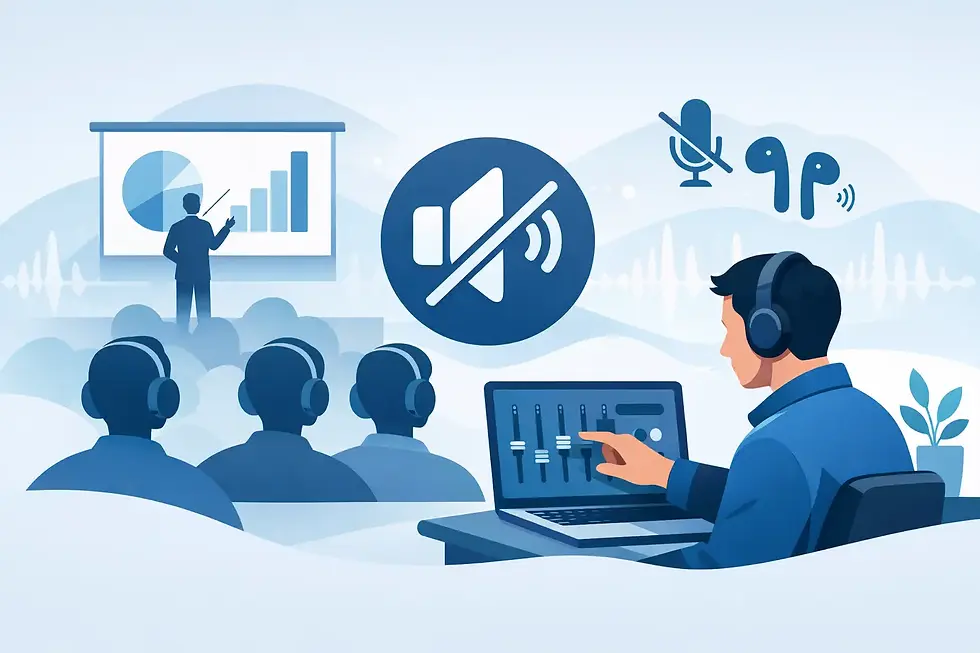
For most live events, event audio translation equipment is a system rather than a single product. At the center is the audio source - usually presenter microphones, playback, panel mics, or a house mix. That source is routed to interpreters, who listen to the original program and deliver a translated feed into dedicated transmitters. Attendees then receive that language channel through wireless receivers and headsets or earbuds.
The exact configuration depends on the room, the number of languages, and how mobile the audience needs to be. A general session with assigned seating calls for a different setup than a roaming expo demonstration or a factory tour. The goal stays the same: isolate the message, preserve speech intelligibility, and keep the experience simple for guests.
A complete system often includes wireless transmitters, receivers, interpreter consoles or booths, microphones, charging stations, monitoring, and on-site support. In some events, the translation feed also needs to tie into recording, streaming, overflow rooms, or assisted listening. That is where planning matters. If the system is designed in pieces instead of as one audio workflow, problems show up quickly.
Why translation audio fails at live events
Most translation issues are not caused by the interpreters. They are caused by signal path problems, poor gain structure, weak receiver coverage, or a room plan that ignores how people actually move and listen.
One common mistake is trying to push multilingual audio through open speakers in a noisy venue. That creates clutter, distracts nearby activations, and usually makes every language harder to follow. Another is assuming the venue house system can handle private translation routing without interference or delay. Sometimes it can. Often, it was built for basic reinforcement, not controlled multilingual delivery.
There is also a user experience problem. If attendees cannot figure out which receiver to use, where to get one, how to switch channels, or where to go when batteries die, the system stops being effective even if the audio quality is strong. Good event audio translation equipment has to work operationally, not just technically.
Matching the system to the event
Conferences and general sessions
For conferences, clarity and channel management usually come first. Keynotes, panels, and breakout content need a clean signal chain from stage to interpreter to attendee. If multiple languages are involved, you need enough receivers, a straightforward check-in process, and a way to support late arrivals without disrupting the session.
In these rooms, the biggest win is often audience focus. Listeners are not trying to decode speech through room reflections and crowd noise. They hear a direct feed in real time, which improves engagement and reduces fatigue over long sessions.
Trade shows and expo floors
Trade shows create a different challenge. Noise is constant, neighboring booths compete for attention, and attendees are rarely stationary. Translation equipment in this setting needs to be portable, channel-specific, and easy to distribute fast.
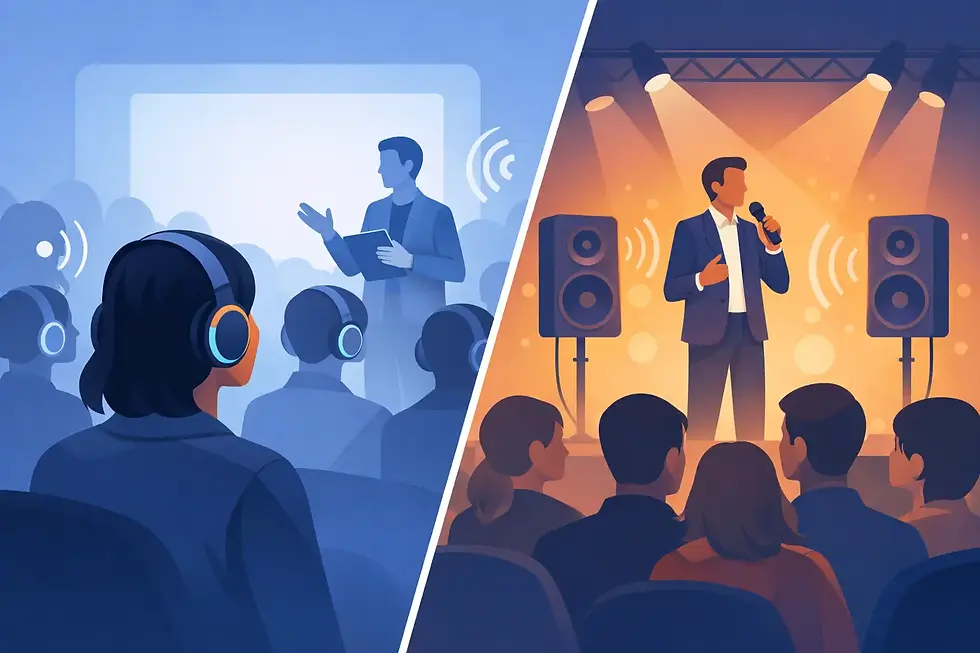
Closed-circuit wireless audio is usually the better fit than adding more speaker volume. It keeps your presentation contained to your audience and lets multilingual attendees follow the message without turning your booth into a sound battle. That is especially useful when demos run every few minutes and each one needs to start cleanly.
Brand activations and retail environments
In retail and branded environments, audio control matters as much as translation. You may need one message for staff, another for guests, and language support for selected audience groups - all inside a space that is still open to the public. A customized setup can separate those paths so communication stays targeted instead of noisy.
This is where flexibility matters. Some activations need lightweight wearable receivers. Others need fixed interpreter positions and scheduled presentation windows. The wrong setup feels cumbersome. The right one feels invisible.
Key decisions before you book event audio translation equipment
The first question is how many languages you need live at the same time. One translated channel is simpler than four, and each added language affects equipment count, interpreter workflow, and monitoring. It also changes how attendees will navigate the system.
The second question is audience size and movement. A seated audience in a ballroom is predictable. A roaming audience in an exhibit hall is not. Coverage, receiver inventory, headset type, and staffing should reflect that difference.
Third, think about the source audio. Are you translating a single presenter on a headset mic, a panel discussion with multiple microphones, video playback, or a mix of all three? Translation quality depends heavily on what interpreters hear. If the source feed is inconsistent, the listener experience will be inconsistent too.
Fourth, consider accessibility and overlap with assisted listening. In many events, these needs intersect. A well-planned system can support multilingual delivery and hearing assistance without building separate, conflicting audio paths.
Finally, ask who is managing the equipment during the event. Translation systems are not difficult when they are planned correctly, but they do need active oversight. Receiver distribution, charging, sanitation, channel assignment, interpreter support, and troubleshooting should not be left to chance.
What to look for in a provider
Not every AV vendor specializes in controlled listening environments. If your event depends on speech clarity in a noisy or multi-use venue, that specialty matters. You want a partner who understands more than microphones and speakers. You want someone who can map the listener experience from stage input to final headset output.
Ask how the system will be configured for your venue, how interference will be avoided, and how attendees will receive and return equipment. Ask whether the translation feed can coexist with presentations next door, with house audio, or with a live stream if needed. Those details are where strong events separate from frustrating ones.
You should also expect practical recommendations, not a one-size-fits-all package. In some cases, a full interpreter booth setup is necessary. In others, a lighter wireless system is more efficient. It depends on program length, room noise, language count, and the level of polish your audience expects.
At Your Event Audio, that consultative piece is what makes the difference. The best system is not the biggest one. It is the one built around how your audience will listen.
The real payoff: less noise, better attention, stronger delivery
When event audio translation equipment is planned well, the benefit goes beyond language support. Presenters hold attention longer. Attendees stay engaged because they are not working to hear. Organizers reduce confusion in rooms with overlapping sessions or heavy ambient noise. Venues benefit because communication becomes more controlled instead of louder.
There is also a brand impact. If you are hosting international buyers, multilingual stakeholders, sponsors, or public-facing guests, audio quality shapes credibility. People notice when communication feels organized and intentional. They notice even more when it does not.
That is why translation equipment should be part of the event communication plan early, not treated as an add-on a few days before load-in. The earlier the system is matched to the room, schedule, and audience flow, the smoother the event runs.
If your event needs to cut through the noise, support multiple languages, or keep presentations clear without filling the room with competing audio, the right setup is worth getting right the first time. A short planning conversation now usually saves a long list of problems on show day.

Comments