Conference Assisted Listening System Guide
A keynote starts strong, but the back row misses half the speaker’s opening because the room HVAC is loud, the crowd is settling in, and the PA is fighting the space. That is exactly where a conference assisted listening system earns its place. It gives attendees a direct, intelligible audio feed, so your message is heard clearly without asking the whole room to get quieter.
For conference planners, producers, and venue teams, this is not a nice extra. It is often the difference between a session that lands and one that feels hard to follow. In busy conference environments, clarity drops fast when you have distance from the stage, reflective rooms, side conversations, exhibit noise, or multiple sessions running nearby.
What a conference assisted listening system actually does
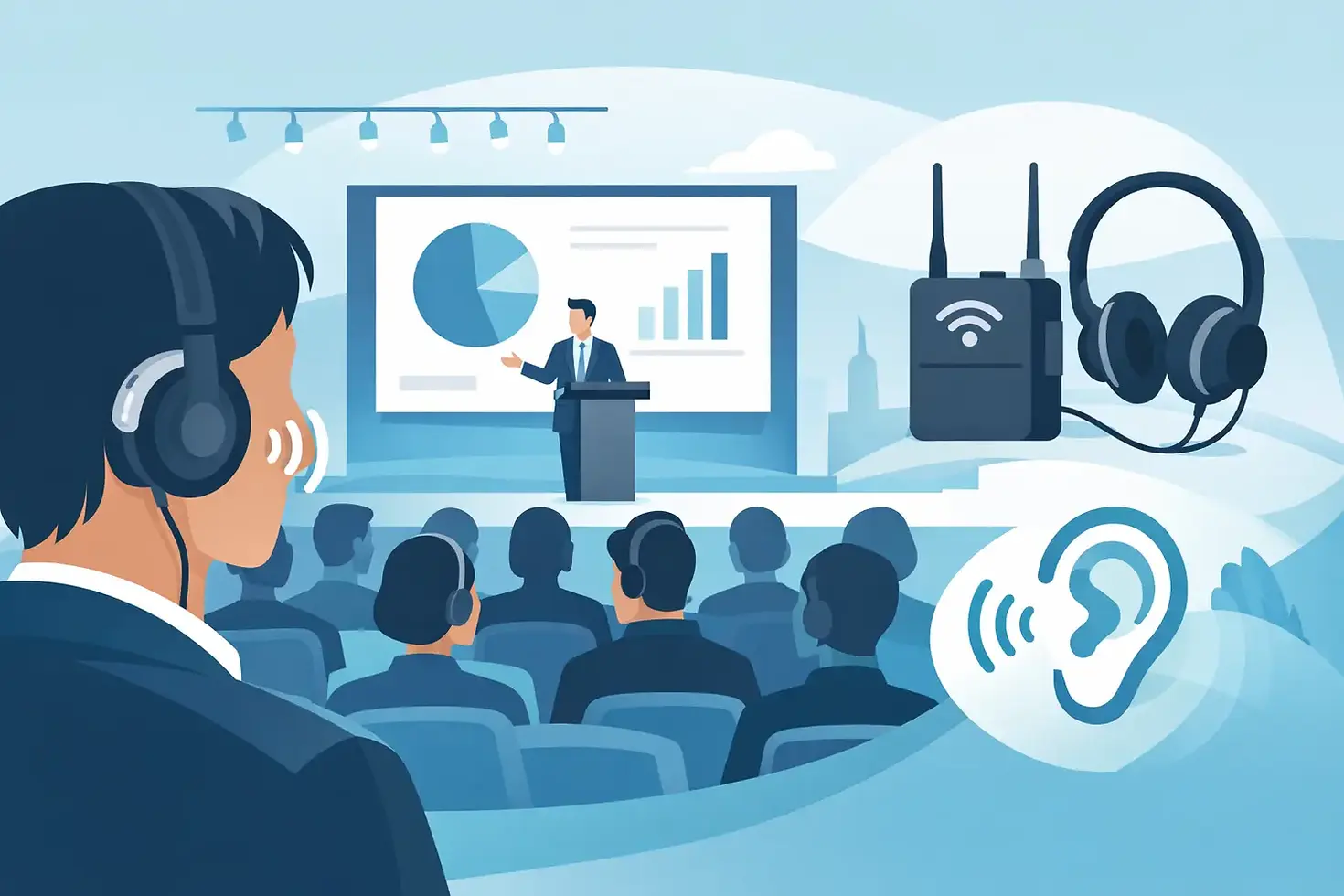
A conference assisted listening system sends the presenter’s audio straight to individual receivers, headsets, or compatible listening devices. Instead of relying only on loudspeakers to cover the room, attendees hear a cleaner signal delivered closer to the ear. That reduces the effect of room noise, echo, and distance.
In practical terms, it helps in three common situations. First, it supports accessibility for guests with hearing loss who need better speech intelligibility. Second, it improves focus for any attendee in a noisy or acoustically difficult room. Third, it creates controlled listening zones for multilingual channels, breakout sessions, or presenter-specific audio without sound bleed into adjacent spaces.
This matters most in live environments where standard sound reinforcement is not enough. A ballroom with 300 seats has different challenges than a quiet boardroom. A trade show education theater has different challenges than a general session. The right system accounts for those differences instead of forcing one setup into every room.
Where conference assisted listening systems make the biggest impact
Conferences are rarely quiet, controlled environments. They are layered with registration traffic, networking, exhibit noise, rolling carts, catering setup, and people entering late. Even a strong PA can only do so much when the room itself works against intelligibility.
In keynote rooms, assisted listening helps attendees hear the presenter more directly, especially from the back and sides of the space. In breakout rooms, it helps when walls are temporary, rooms are undersized, or adjacent sessions leak noise. On expo floors, it is often one of the only reliable ways to keep educational content intelligible without turning the whole area into a volume war.
It also becomes especially useful when a conference includes multilingual audiences. Instead of pushing multiple languages through speakers, you can route different language channels to separate receivers. Attendees select the feed they need, and the room stays organized.
For panel discussions, fireside chats, and Q&A sessions, a direct listening feed can also smooth out the unevenness that happens when multiple microphones are in play. If one panelist speaks softly or a guest question comes from the back of the room, attendees using receivers still get a more consistent experience.
Why the right system is not one-size-fits-all
Not every conference assisted listening system is built the same, and that is where planning matters. The best setup depends on room size, expected audience count, venue noise level, program format, accessibility needs, and whether you need one channel or several.
A single-room corporate meeting may only need a straightforward transmitter and a managed set of receivers. A multi-track conference with simultaneous sessions may need channel coordination, check-in procedures, sanitization workflow, charging logistics, and on-site support to keep everything moving. If interpretation is part of the program, the signal path becomes even more important because routing mistakes can create confusion fast.
There is also a trade-off between simplicity and flexibility. A smaller setup is easier to deploy, but it may not scale well if attendance grows or the agenda changes. A more advanced configuration can support more use cases, but it should still be easy for staff and attendees to use on event day. The goal is not to add gear for the sake of it. The goal is dependable audio delivery that fits the event.
Key planning questions before you book a system
The fastest way to avoid audio problems is to define the use case early. Start with the audience. Are you covering accessibility requirements, improving general speech clarity, or supporting multilingual content? In many events, the answer is all three, but one usually drives the setup.
Next, look at the room conditions. Is the venue carpeted and controlled, or is it a hard-walled space with lots of reflection? Are there nearby sessions, expo booths, or public traffic creating constant background noise? A system that works well in a hotel meeting room may need a different approach on a convention floor.
Then consider operations. Who distributes the receivers? How are units collected, cleaned, charged, and redeployed between sessions? Will attendees use earbuds, headsets, or neck loops? These details sound small until registration opens and 40 people need support at once.
A good provider will ask these questions because system performance is only half the job. The rest is deployment, support, and making the experience easy for attendees and staff.
What to expect from a well-managed deployment
A properly deployed assisted listening setup should feel simple from the attendee side. Check out a receiver, select the right channel if needed, put on the listening accessory, and hear the session clearly. If guests need help, support should be visible and immediate.
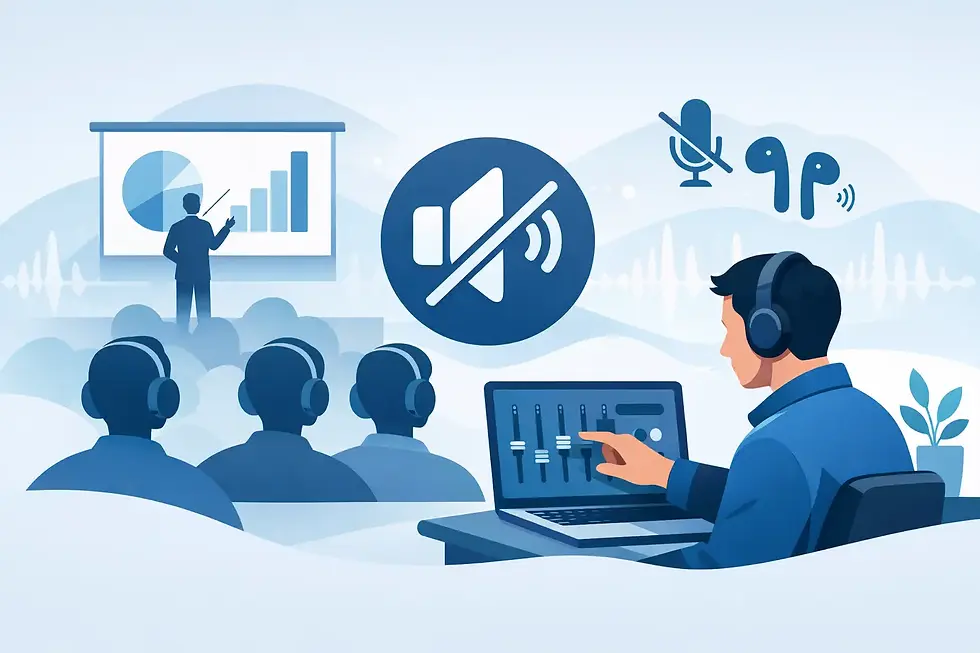
From the organizer side, reliability is the real value. You want clean signal coverage in the room, enough devices for expected demand, a plan for overflow, and staff who know how to troubleshoot quickly. Battery management, channel labeling, and device turnaround should already be handled before your team is forced to think about them.
This is where a service-driven partner makes a difference. A conference assisted listening system is not just equipment on a table. It is part of the attendee experience, part of your accessibility readiness, and part of how professional your event feels when the room gets busy.
Common mistakes that lead to poor listening experiences
The most common mistake is treating assisted listening as a last-minute add-on. When it gets planned too late, the system may not match the room, the agenda, or the attendance pattern. That usually leads to not enough receivers, unclear distribution, or poor coordination with the main audio setup.
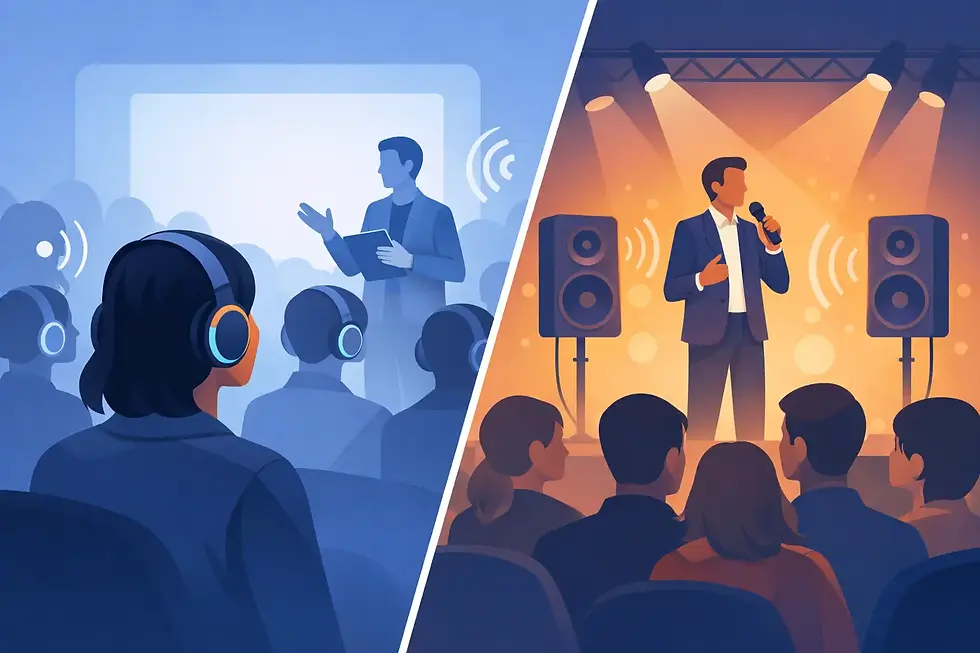
Another issue is assuming the house sound system covers the need by itself. A loud PA does not guarantee speech clarity. In fact, increasing speaker volume can make listener fatigue worse in reflective or noisy spaces. Direct-to-ear listening often solves a different problem than louder speakers do.
Understaffing is another frequent problem. Even a simple system needs a process. Receivers must be ready, labeled, charged, and explained clearly. If there are multiple channels, attendees need fast guidance so they get the right feed without delay.
Finally, some events overlook how assisted listening can help beyond minimum compliance. When used strategically, it improves engagement, supports higher-value content delivery, and gives attendees more confidence that they will actually hear what they came for.
Choosing a partner for conference assisted listening systems
When you evaluate providers, look beyond inventory. Ask how they assess room conditions, how they coordinate with your show audio team, and how they support live event operations. The right partner should be able to explain the setup in plain language and adapt it to your schedule, floor plan, and audience profile.
It also helps to work with a team that understands adjacent use cases. Conferences often need more than one audio solution at the same time. You may have assisted listening in one room, multilingual feeds in another, private listening for an expo activation, and standard reinforcement for a general session. Those pieces should work together, not compete.
That consultative approach is where companies like Your Event Audio stand out. The value is not just crystal clear audio solutions. It is getting a system configured around the event you are actually producing, with the support to keep it running when doors open.
If your attendees need to hear clearly in a difficult room, a conference assisted listening system is one of the most practical upgrades you can make. It cuts through the noise, protects the presenter’s message, and gives your audience a better reason to stay engaged from the first word to the last.

Comments