
Multi Channel Event Audio That Cuts Noise
Anyone who has stood in a trade show aisle while two booth demos, a nearby stage, and the venue PA compete for attention already knows the problem. Multi channel event audio solves it by sending the right message to the right listener without forcing the whole room to hear everything at once.
That matters more than most planners expect. When attendees miss instructions, strain to hear a presenter, or walk away because the space feels loud and chaotic, the event loses impact. Clear audio is not just a production detail. It affects engagement, accessibility, traffic flow, and how professional your event feels in real time.
What multi channel event audio actually means
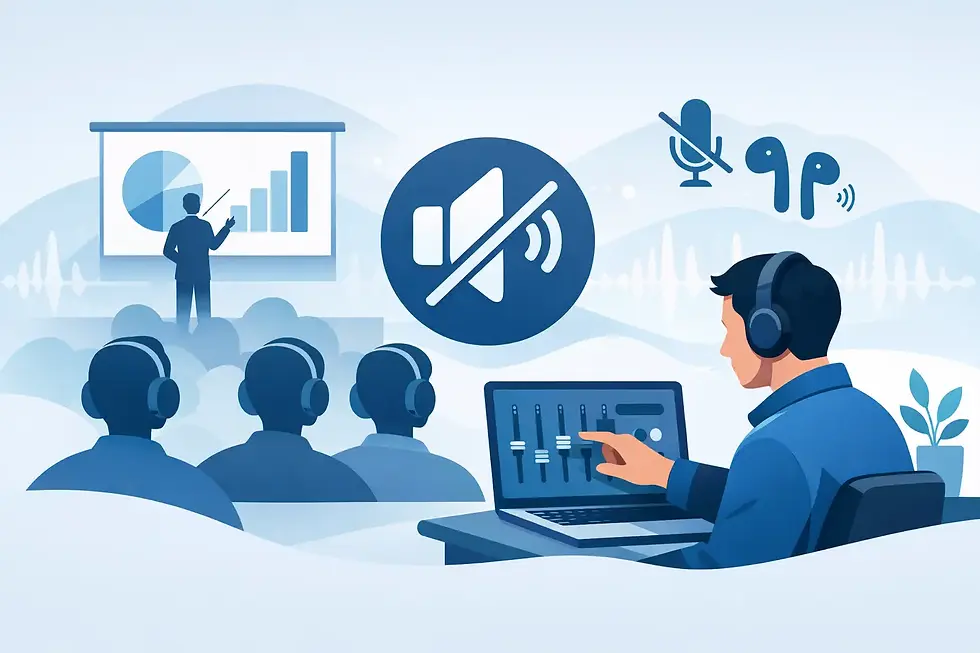
At its core, multi channel event audio is a controlled audio setup that delivers different content streams at the same event. One group can hear Presenter A, another can hear Presenter B, and staff can receive separate operational communication, all within the same environment.
This can be done through wireless headsets, assisted listening receivers, private listening devices, closed-circuit broadcast systems, or zone-based audio routing. The exact setup depends on the venue, audience size, movement patterns, and how many audio sources need to run at once.
For planners, the benefit is straightforward. You stop treating the entire venue like one listening area. Instead, you create intentional audio paths based on what each audience segment actually needs to hear.
Where multi channel event audio works best
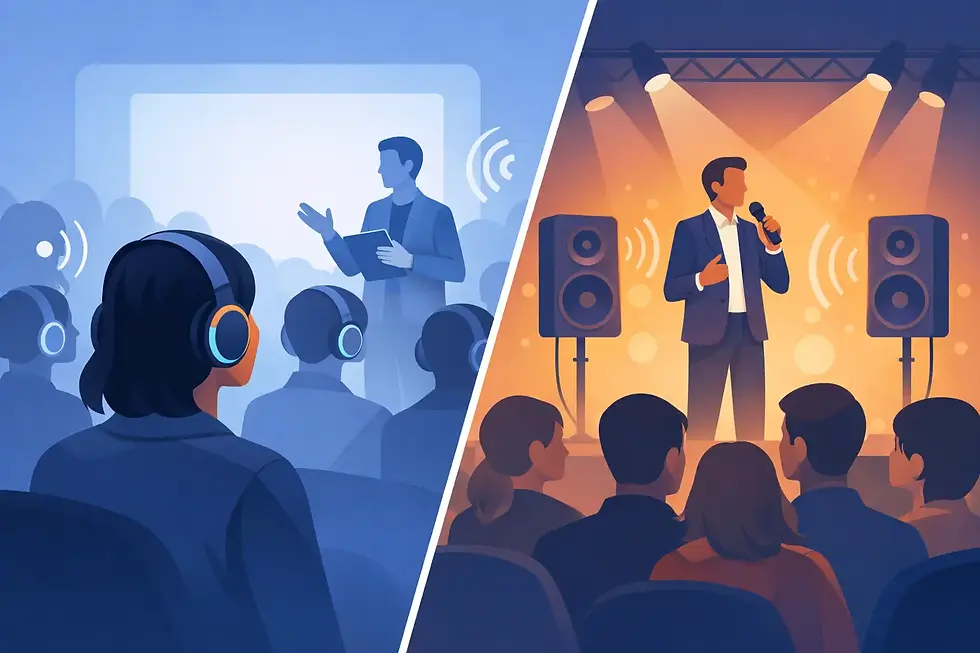
The most obvious fit is a trade show floor. If your booth is hosting product demos while the neighboring exhibitor is running a giveaway and the venue itself is already loud, traditional speakers only add to the problem. A private listening system lets attendees hear your presentation clearly without adding more noise to the aisle.
Conferences are another strong use case, especially when breakout content overlaps or when sessions are set up in open spaces instead of enclosed rooms. In those environments, sound bleed becomes a constant issue. Multi channel event audio keeps each session intelligible without requiring hard walls or major venue changes.
Brand activations also benefit. If you are running guided experiences, timed messaging, live emcee segments, or VIP content tracks, targeted audio creates a more controlled guest experience. Retail events, sports venues, fan zones, and public promotions often need the same precision. One area may need public-facing announcements while another needs private program audio.
There is also an accessibility component. Assisted listening is not a side feature. For many events, it is essential. A well-designed multi-channel system can support guests who need clearer direct audio, language-specific feeds, or presenter-focused listening without compromising the experience for everyone else.
Why standard PA systems fall short
A traditional PA has one main job - make sound louder in a space. That works when the whole audience needs the same message and the room is built to support amplified speech. But many live events are not that simple.
Open-floor presentations, mixed-use venues, and high-noise environments create conditions where louder audio does not equal clearer communication. Often it does the opposite. Raising volume increases fatigue, adds spill into nearby areas, and can make speech harder to understand.
That is where planners run into the limits of conventional sound reinforcement. If you have multiple presenters, multilingual attendees, sponsor activations, or audience groups moving through different zones, one shared audio path becomes a bottleneck. Multi channel event audio gives you control instead of brute force.
The business case for clearer, targeted sound
Event audio decisions are often treated like technical line items, but the payoff shows up in audience behavior. When people can hear clearly, they stay longer, ask better questions, and follow direction faster. Presenters sound more confident. Staff spend less time repeating information. Sponsors get more meaningful attention.
At trade shows, that can mean stronger demo retention and better booth conversations. At conferences, it can mean fewer complaints about overlapping sessions and better engagement in overflow areas. For activations, it can mean tighter timing and a more premium brand experience.
There is also a practical operational value. Targeted audio reduces unnecessary ambient noise, which helps the entire event feel more organized. In busy venues, that control is a real advantage.
Planning a multi channel event audio setup
The best systems start with event goals, not gear lists. Before anything is deployed, planners should define who needs to hear what, where they will be standing or moving, and how many simultaneous audio paths the event requires.
A product launch may need one presenter feed for attendees, another for production monitoring, and a separate channel for staff coordination. A multilingual session may need one floor language plus alternate language channels. A trade show booth may need a presenter mic, program music, and private listening for guests without pushing all of it into the aisle.
The venue matters too. Ceiling height, RF conditions, nearby exhibitors, audience density, and power access all affect system design. So does event flow. A stationary seated audience calls for a different approach than a moving crowd in a retail or expo setting.
This is why custom configuration matters. The right solution is rarely off the shelf in any useful sense. It needs to match your content, your layout, and your audience behavior.
What to look for in a provider
Not every audio company is built for this kind of work. Many providers are strong on speakers, mixers, and stage sound but have less experience with closed-circuit listening, assisted listening, and multi-presentation environments.
For multi channel event audio, you want a partner who understands signal routing, wireless distribution, listener device management, and live event logistics. Just as important, they should be able to translate technical options into practical decisions. You should not need to become an RF engineer to get a system that works.
Look for a team that asks detailed questions early. How many simultaneous channels are needed? Will attendees be stationary or mobile? Is language support required? Does the event need private audio, public address, or both? What happens if the room layout changes on site? Those questions usually tell you whether the provider is solving the real communication problem or just quoting equipment.
Common trade-offs planners should expect
There is no one-size-fits-all setup, and a good provider will say that clearly. More channels create more flexibility, but they also increase coordination. Wireless listening devices improve clarity, but they require distribution and collection planning. Private audio solves bleed, but public announcements may still be needed for safety or crowd control.
Budget also depends on the use case. A single presentation channel in a noisy booth is very different from a conference-wide deployment with language support and assisted listening. The goal is not to overbuild. It is to choose the level of control that protects the attendee experience and supports the event objectives.
This is where demos and consultation help. When planners can see how targeted audio performs in a real venue scenario, decisions get easier. The difference is usually obvious within minutes.
Multi channel event audio as an audience experience tool
The strongest events feel intentional. Attendees know where to focus, presenters are heard without strain, and the environment supports the message instead of fighting it. That is exactly what multi channel event audio is built to do.
It is not only about reducing noise. It is about directing attention. In crowded, high-distraction spaces, attention is limited. If your event depends on live communication, then audio is one of the fastest ways to either lose that attention or keep it.
For planners who need more than a standard speaker setup, this is where specialized support makes the difference. Your Event Audio helps organizers build crystal clear audio solutions for trade shows, conferences, activations, and live events where clarity cannot be left to chance.
If your audience needs to hear the right message in the right place at the right time, multi-channel audio is not an extra feature. It is part of making the event work the way you intended.

Comments