
Trade Show Silent Presentation System Guide
A packed expo hall can kill a good presentation in seconds. Between nearby booths, overhead announcements, aisle traffic, and competing microphones, even strong speakers lose attention fast. A trade show silent presentation system changes that by sending clear audio directly to attendees through wireless headsets, so your message reaches the right people without fighting the room.
What a trade show silent presentation system actually does
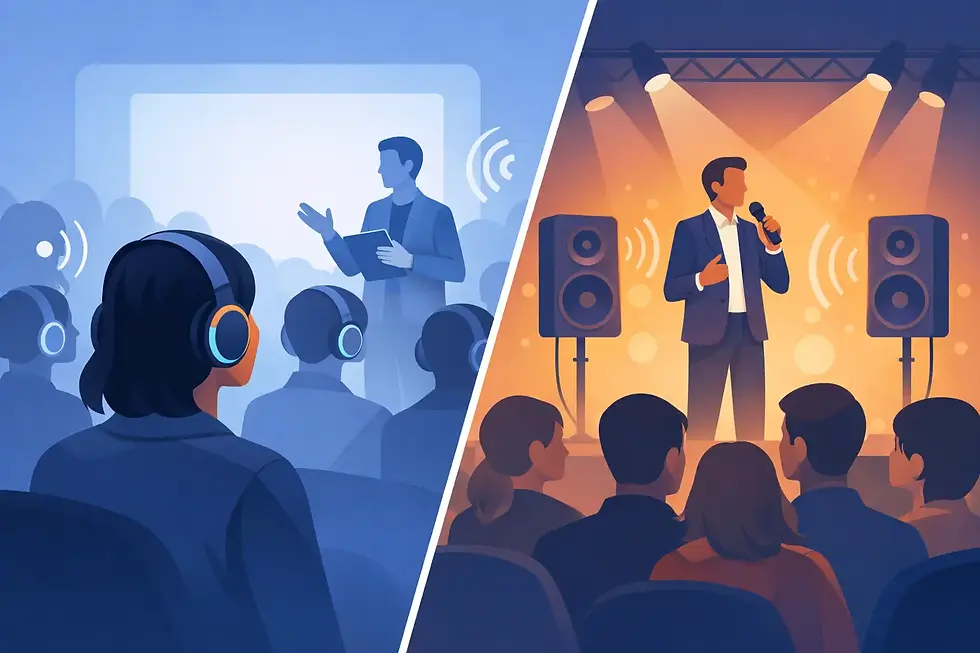
At its core, this setup replaces open-air booth audio with closed-circuit listening. Your presenter speaks into a microphone, the audio is transmitted wirelessly, and attendees hear the presentation through lightweight headphones or receivers. Instead of blasting sound into a crowded hall, you create a controlled listening experience inside a noisy environment.
That matters for more than volume. It improves focus, reduces distractions, and gives your team a way to present with confidence even when the venue is working against you. It also keeps your booth from becoming part of the noise problem for everyone around you.
For trade shows, that controlled delivery is often the difference between a presentation people notice and one people walk past.
Why this system works so well on a busy show floor
Most trade show audio problems are not caused by bad speakers. They come from bad conditions. Hard floors, open ceilings, multiple exhibitors, and constant movement make traditional sound reinforcement unreliable. You can turn up the volume, but that usually makes the space feel more chaotic and does not guarantee better understanding.
A trade show silent presentation system solves the problem differently. It does not try to overpower the environment. It bypasses it.
That gives exhibitors and event organizers several practical advantages. Presenters can speak at a normal level and still be heard clearly. Attendees can stay engaged without straining to catch every word. Nearby booths are not disrupted by spillover sound. Event producers can support more demos and scheduled talks in the same hall without creating an audio mess.
There is also a branding benefit. A silent presentation area feels intentional. It signals that the experience has been designed, not improvised. That can raise perceived quality for product launches, sponsored education sessions, and premium booth activations.
Best use cases for a trade show silent presentation system
This type of system is especially effective when spoken content drives results. If your booth depends on live demos, thought leadership sessions, technical explanations, or scheduled presentations, direct-to-listener audio helps protect that investment.
Product demonstrations are a strong fit because they often involve detail. If attendees miss the key differentiator, the presentation loses value. Sending the audio straight to the listener keeps every feature explanation, customer example, and callout clear.
Panel discussions and expert talks also benefit. In open exhibit halls, conversation-style content is often the first thing to get lost in background noise. A silent audio setup makes softer voices, back-and-forth discussion, and audience Q and A easier to follow.
Multilingual events are another smart application. With the right configuration, different channels can support different languages or different presentations in the same footprint. That flexibility is useful for international brands, global exhibitors, and conference-style expo environments.
Accessibility is another real reason planners choose this approach. Clear, direct audio can support attendees who struggle in noisy spaces or need a more controlled listening experience. Depending on event requirements, a silent system can also work alongside assisted listening solutions.
The real operational benefits for exhibitors and producers
The biggest value is simple: people hear the message. But for event teams, the operational side matters just as much.
First, a silent system can improve booth flow. Instead of random crowding around a speaker stack, attendees know where to pick up headsets, where to stand, and when a presentation is starting. That creates more structure around demos and helps staff manage audience movement.
Second, it reduces sound complaints. Trade shows are full of exhibitors pushing for attention. When one booth turns up the volume, nearby booths often respond the same way. The result is predictable. Everyone gets louder, and nobody gets clearer. A headphone-based system breaks that cycle.
Third, it gives producers more control in multi-use spaces. If a hall includes education areas, sponsor activations, networking zones, and exhibit booths, audio containment becomes a serious planning issue. Silent presentation systems let more programming happen at once without forcing hard separation between areas.
There is also a staffing benefit. Presenters usually perform better when they know the audience can hear them. They do not have to shout, repeat themselves, or constantly adjust for room noise. That leads to a more polished delivery and less fatigue across a long event day.
What to look for in a trade show silent presentation system
Not all systems are equal, and the right setup depends on booth size, audience turnover, content format, and venue conditions.
Audio clarity should be the first priority. That sounds obvious, but trade show environments expose weak equipment fast. You need stable transmission, clean microphone input, and headsets or receivers that are comfortable enough for repeat use throughout the day.
Channel capacity matters if you are running more than one program or need language options. Some exhibitors only need a single presenter channel. Others need parallel content, simultaneous translation, or the ability to switch formats across the event.
Headset management is another practical issue. If you expect high traffic, distribution, collection, charging, cleaning, and backup inventory all need to be planned. A system can be technically strong and still create friction if headset handling is slow or disorganized.
Microphone choice also affects results. A headset mic may be right for a moving presenter. A handheld may be better for moderated discussion or audience interaction. A lavalier can work well for product demos, but only if the environment and speaking style support it.
Finally, support matters. A trade show is not the place to test a do-it-yourself audio plan with no backup. Setup, frequency coordination, live troubleshooting, and on-site adjustments are part of the service, not extras. That is where an experienced event audio partner makes a measurable difference.
Common mistakes that weaken the experience
One of the biggest mistakes is treating silent audio as just a gear rental. The system needs to fit the presentation plan, booth layout, and attendee flow. If those pieces are not aligned, even good equipment can underperform.
Another common issue is underestimating audience volume. If the booth draws more traffic than expected and there are not enough receivers in circulation, people wait, disengage, or move on. It is better to plan for peak interest than average traffic.
Poor signage is another missed opportunity. Attendees need to know quickly that audio is available through headsets and that a presentation is about to begin. If the experience is not clearly framed, some visitors will assume the booth is inactive because they do not hear amplified sound.
Some teams also overcomplicate the content. A silent system improves intelligibility, but it does not fix a weak presentation. The best results come from concise sessions, clear speaker transitions, and messaging designed for trade show attention spans.
When this approach makes the most sense
A trade show silent presentation system is not necessary for every exhibitor. If your booth relies mostly on one-to-one conversations or simple visual displays, traditional sound may not be needed at all. But if live spoken content is central to lead generation, education, or audience capture, this setup is often the cleanest way to protect that content.
It makes the most sense when venue noise is high, presentation timing matters, nearby exhibitors are close, or multiple messages need to happen in one area. It is also a strong choice when brand perception matters and you want the booth to feel organized, premium, and easy to engage with.
For producers, it becomes even more valuable when several exhibitors or program zones share the same floor. Controlled audio lets you support more activity without sacrificing listener experience.
Cut through the noise with the right partner
The right silent presentation setup should feel simple to your audience and fully handled behind the scenes. That means matching the system to the space, the schedule, and the goals of the event rather than forcing a one-size-fits-all package.
Your Event Audio works with organizers, exhibitors, and presenters who need crystal clear audio in places where standard sound reinforcement falls short. When the goal is better engagement without sound bleed, a custom trade show silent presentation system gives you a practical edge.
If your next event depends on people actually hearing what you have to say, start with the audio plan early. The quieter your delivery feels on the floor, the stronger your message can land.


Comments