Closed Circuit Audio for Events That Work
A keynote starts on time, but the room never really settles. Booth noise spills in from the expo floor, a breakout session next door ramps up, and half the audience misses the first key point. That is exactly where closed circuit audio for events changes the outcome. Instead of asking presenters to fight the room, it gives attendees a direct, controlled listening experience that keeps the message clear.
For event organizers, that matters because poor audio is rarely just an audio problem. It affects audience attention, presentation quality, accessibility, sponsor value, and overall event flow. If people cannot hear clearly, they stop engaging. If multiple presentations bleed into each other, the entire environment feels disorganized. Closed-circuit systems solve that with precision.
What closed circuit audio for events actually does
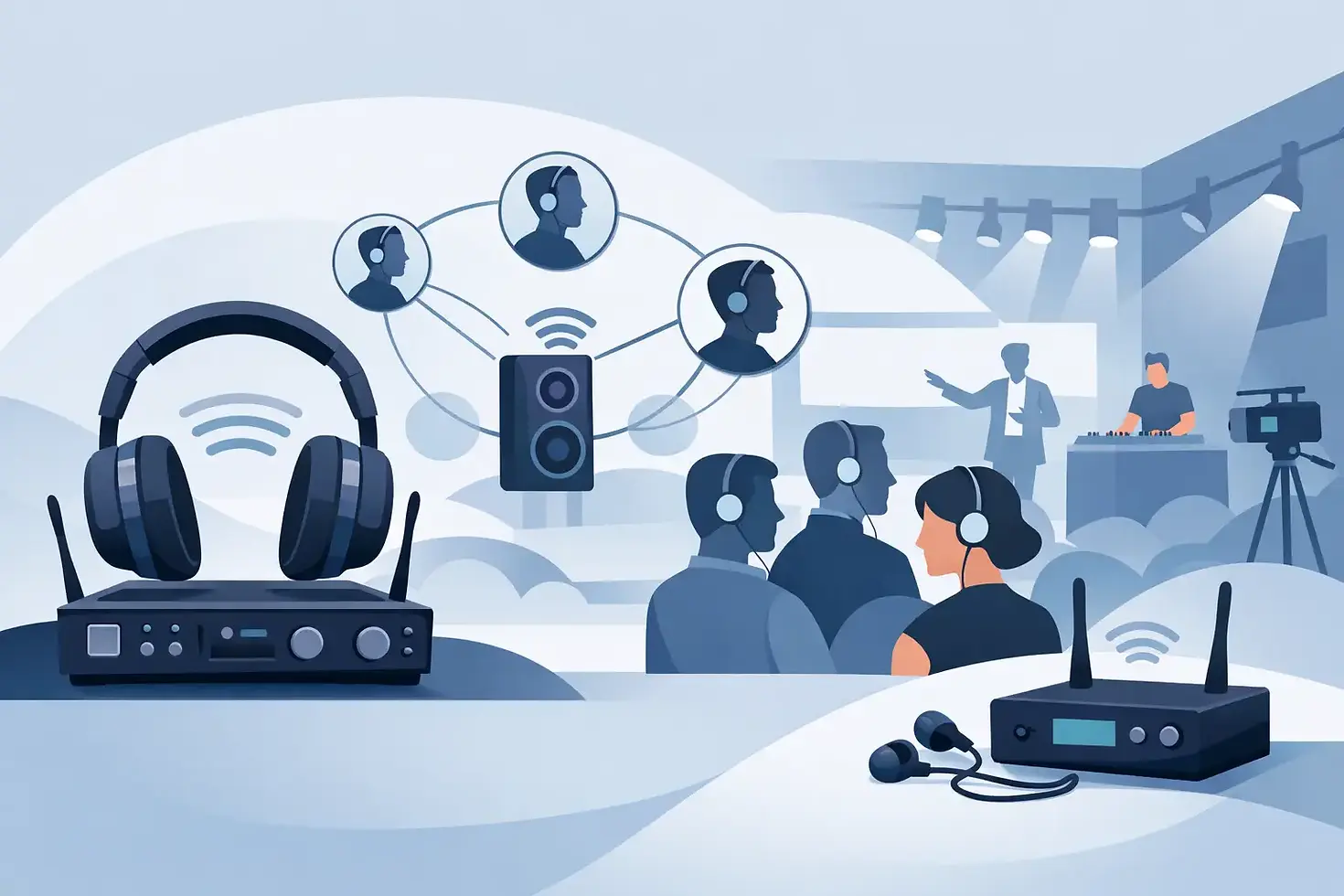
Closed circuit audio sends sound directly to selected listeners through wireless receivers, headphones, earbuds, or dedicated listening devices rather than relying only on loudspeakers in the room. The goal is simple - deliver audio exactly where it needs to go, without adding more noise to the venue.
That can mean one presenter transmitting to a crowd on a busy trade show floor. It can mean multiple speakers running side by side in the same space, each on a separate channel. It can also mean assisted listening support for attendees who need clearer speech reinforcement. In each case, the system creates a more focused listening environment.
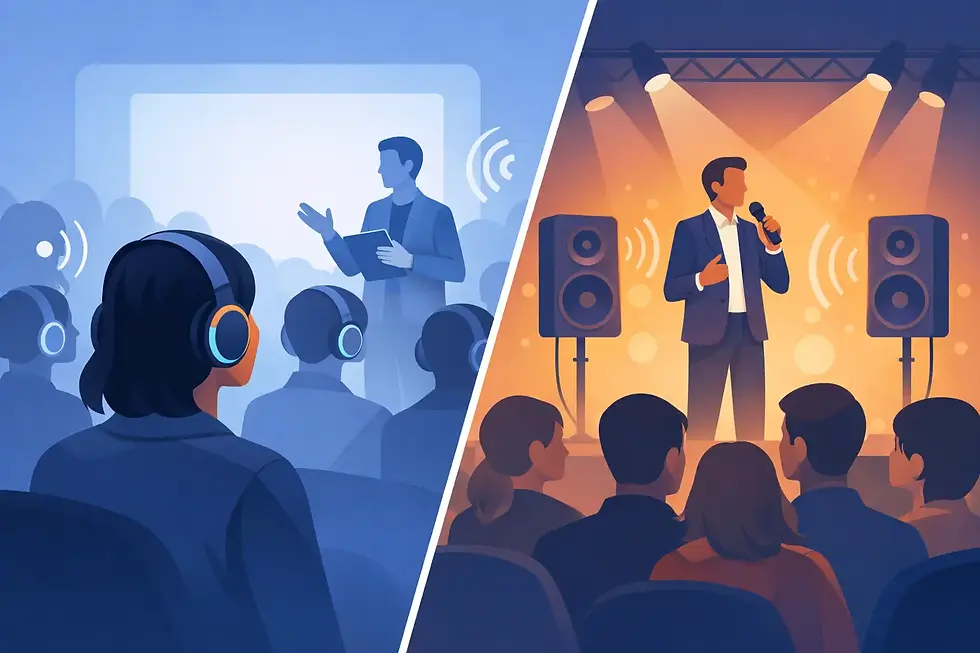
This is why standard PA alone is often not enough. Speakers are useful when you want broad coverage, but they are limited in loud, reflective, or shared spaces. Turning them up can make the problem worse by increasing sound bleed and listener fatigue. Closed-circuit audio gives you control that open-air sound reinforcement cannot.
Where it makes the biggest impact
Trade shows are one of the strongest use cases. You may have a product demo, branded presentation, or live promotion in a space packed with competing sound. With headsets or wireless receivers, your audience hears your presenter clearly while neighboring booths keep operating as usual. Your team does not need to shout, and your attendees do not need to strain.
Conferences also benefit, especially when venues are divided into breakout areas or multi-session environments. If two presentations are happening close together, a closed-circuit setup keeps each audience tuned to the right speaker. The result is less distraction and fewer complaints about noise overlap.
Retail activations and brand pop-ups often have a different challenge. You want energy, but you do not want to overwhelm the space or disrupt nearby tenants. Directed audio lets you create a branded experience without turning the entire location into one large sound zone.
Sporting events, live promotions, and temporary event spaces can also be difficult from an audio standpoint. Crowd noise changes fast. Announcements need to reach the right group at the right moment. Sometimes a hybrid setup works best, with public address for broad messaging and closed-circuit channels for staff communication, VIP experiences, commentary, or guided audience listening.
Why organizers choose it over louder speakers
The biggest advantage is clarity. Attendees hear the presenter directly, which improves focus and retention. That sounds obvious, but in event environments, clarity is usually the difference between a session that lands and one that gets ignored.
The second advantage is control. Not every event needs the same message heard by everyone in the venue. You may need one channel for general attendees, another for interpreters, and another for a private group. You may need a quiet room that still supports a live presentation. Closed-circuit audio makes that possible without complicated room reengineering.
There is also an operational advantage. When audio is controlled at the listener level, presenters tend to perform better. They are not pushing against room noise, and production teams are not constantly chasing volume problems. That creates a more stable event environment.
The trade-off is that these systems require a little more planning than simply placing speakers in a room. You need to think about audience size, headset or receiver distribution, frequency coordination, battery management, and how people will join the listening experience. That is why setup quality matters. A good system feels easy to use because the technical work has already been handled.
The most common event setups
There is no single best configuration because the right system depends on the venue, the audience, and the event objective. A presenter-led silent seminar at a trade show needs something different from a multilingual conference session or a retail activation with rotating demos.
For booth presentations and expo-floor speaking, the typical approach is a wireless transmitter connected to the presenter mic and playback sources, with attendees listening on lightweight headsets or receivers. This keeps the experience focused and reduces spill into neighboring areas.
For multilingual events, closed-circuit audio can support language channels so attendees choose the feed they need. That improves access without forcing every participant into the same format. It also helps international audiences feel accommodated without changing the main room setup.
For assisted listening, the system can deliver cleaner audio directly to guests who need speech support. This is not just about compliance. It improves the attendee experience and makes the event more inclusive.
For spaces with multiple simultaneous presenters, separate channels are often the deciding factor. Each speaker can reach their own audience without competing acoustically. In practical terms, that means more usable square footage and fewer compromises in event design.
What to consider before you book a system
Start with the environment. Is the space loud, open, reflective, or shared with other programming? If yes, closed-circuit audio is often a better fit than trying to overpower the room.
Next, look at the audience journey. Will attendees receive headsets on entry, pick them up at a booth, or use managed receivers? The easier this process is, the stronger your participation rate will be. Good event audio planning is not only about signal flow. It is also about how the audience joins the experience.
Then consider your content format. A single presenter is straightforward. A panel discussion, interpreted session, or mixed media presentation needs more coordination. You also need to account for whether the event includes public address announcements, music playback, or remote audio feeds.
Support is another major factor. Equipment alone is not the same as an event-ready solution. Live environments change quickly, and issues are easier to prevent than fix on the spot. A service-based partner can test the setup, manage deployment, monitor performance, and adjust as conditions shift.
Closed circuit audio for events and accessibility
Accessibility should not be treated as an add-on. In many event settings, direct-listening systems help attendees who struggle with speech intelligibility, hearing fatigue, or distance from the presenter. That is especially true in noisy venues where even strong house sound leaves people missing words.
Closed-circuit audio can support assisted listening in a way that feels practical and discreet. Attendees receive the audio more clearly, and organizers reduce the risk of leaving part of the audience behind. For conferences, public-facing activations, and branded experiences, that is both a service decision and a reputation decision.
Why customization matters
Two events can have the same headcount and need completely different audio strategies. A polished general session in a hotel ballroom is not the same as a product launch on a crowded exhibit floor. A venue with strict sound limits is not the same as an outdoor fan experience. The right system depends on what success looks like for that specific event.
That is where consultative planning makes the difference. Your Event Audio focuses on custom closed-circuit solutions because off-the-shelf thinking often falls apart in real venues. The better approach is to match the system to the presenter, the audience, and the environment, then make it simple to operate on event day.
If your event has overlapping sessions, high ambient noise, accessibility requirements, or audience attention problems, louder is probably not the answer. Better targeting is. Closed-circuit audio gives you a cleaner way to deliver the message, protect the listener experience, and keep the event under control. When people can actually hear, everything else works better.


Comments