
Event Radio Broadcast System for Clear Audio
A keynote starts on time, but half the audience is fighting room noise, hallway chatter, and a nearby booth running its own demo at full volume. That is exactly where an event radio broadcast system changes the outcome. Instead of asking guests to work harder to hear, it delivers clear audio directly to the listener, where the message stays intact and the event runs with more control.
For planners, producers, and venue teams, this is not just an audio upgrade. It is a way to fix a common event problem that standard speakers cannot always solve. In crowded halls, multi-use venues, retail spaces, fan zones, and live promotions, broadcast-to-receiver audio gives you precision. People hear what matters without adding more noise to the room.
What an event radio broadcast system actually does
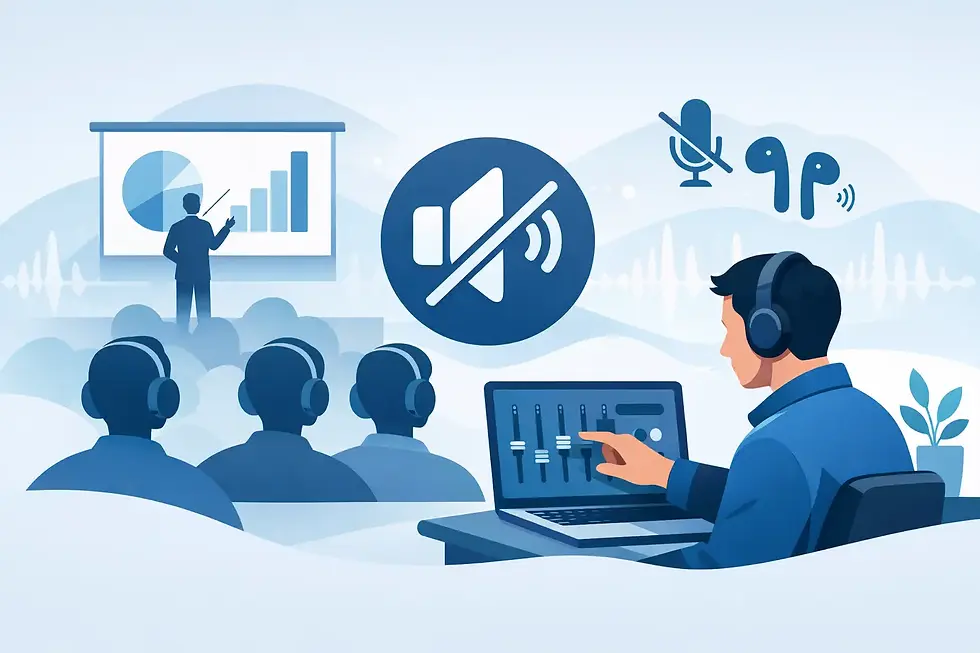
An event radio broadcast system sends live audio from a microphone, mixer, presentation feed, translator channel, or program source to wireless receivers used by attendees, staff, or presenters. Instead of relying only on loudspeakers, the system puts the signal directly in the listener's hands through headsets, earpieces, or assistive listening devices.
That sounds simple, but the value is operational. You can support a speaker on a noisy trade show floor, run guided tours without shouting, deliver multiple language channels, or create private listening zones inside a larger event. The room can stay active while your audience still gets a clean feed.
This matters most when sound bleed is a problem. At a conference with breakout sessions side by side, louder speakers are rarely the answer. They often make the whole floor harder to manage. A controlled wireless broadcast lets each audience hear the right content without competing with every nearby activation.
Where event radio broadcast systems work best
Trade shows are one of the clearest use cases. Booth presentations happen in open air, traffic is constant, and neighboring exhibitors are competing for attention at the same time. A wireless listening setup helps your presenter stay intelligible without turning the booth into a volume war.
Conferences also benefit, especially when there are overflow rooms, multilingual audiences, or breakout sessions in less-than-ideal acoustic spaces. In these settings, direct-to-listener audio improves comprehension and reduces listener fatigue. Attendees stay engaged longer when they are not straining to keep up.
Brand activations and retail events have a different challenge. The goal is often targeted engagement, not venue-wide amplification. You may want shoppers, invited guests, or a guided group to hear a host, DJ, or brand message without disrupting the entire space. A broadcast system gives you that control.
Sporting events, fan experiences, and promotional events can use the same approach for announcer audio, guided commentary, VIP experiences, or staff coordination. The system can also support temporary assisted listening where permanent infrastructure is limited or unavailable.
Why standard PA is not always enough
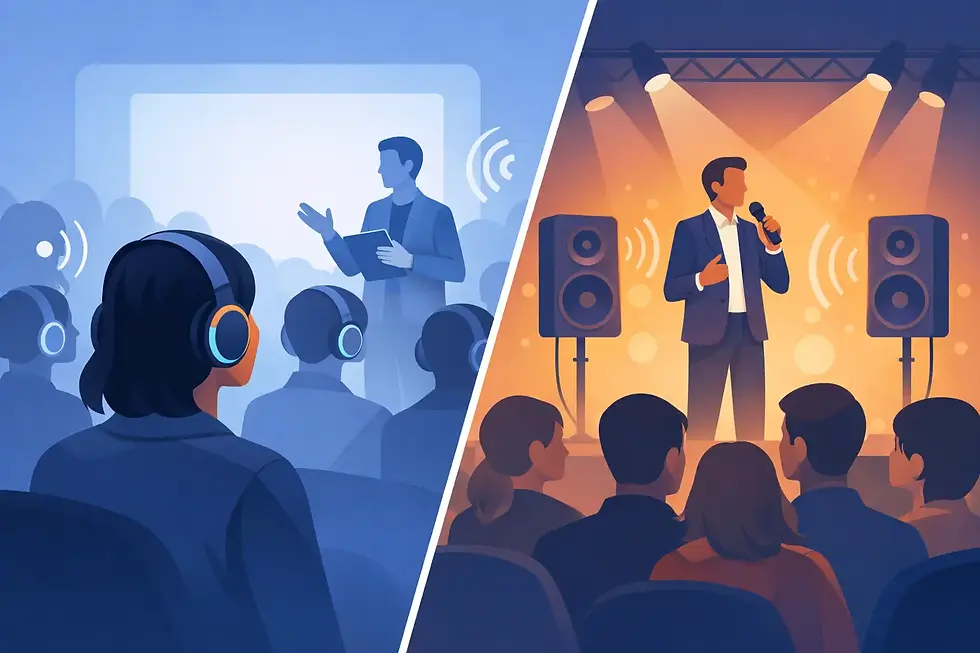
Public address systems are still useful. For many events, they are part of the solution. But they are designed to fill space with sound, and that is not always the same thing as delivering clarity.
In an expo hall, a PA can spread your message and your problems at the same time. Reflections, ambient noise, competing exhibitors, and distance from the speaker all chip away at intelligibility. Turning the volume up may help the front row and hurt everyone else.
A radio-based event system works differently. It lowers dependency on the room itself. That creates a cleaner listening experience for attendees and a more manageable sound environment for organizers. You are not fighting architecture, crowd density, or adjacent programming every minute of the show.
There is a trade-off, of course. Attendees need receivers or listening devices, so the system works best when access, distribution, and collection are planned well. That is why setup and staffing matter just as much as the hardware.
Key parts of an event radio broadcast system
At the core, the system includes a transmitter, audio source inputs, wireless receivers, and listener headsets or earpieces. Depending on the event, it may also include handheld or lavalier microphones, mixing support, translation feeds, assistive listening components, charging stations, and on-site distribution management.
The right configuration depends on the audience size and use case. A single presenter at a product demo needs a very different setup than a conference running multiple channels across several rooms. Some events need one clean program feed. Others need separate channels for language interpretation, presenter monitoring, or private group communication.
This is where custom planning matters. Range, frequency coordination, battery management, audience flow, and receiver count all affect performance. The equipment has to match the environment, not just the guest count.
Planning the system around the event, not just the room
The strongest deployments start with a few practical questions. Who needs to hear the audio? How many channels are required? Will devices be shared, assigned, or distributed at entry? Is the goal accessibility, audience engagement, presenter support, or noise control?
Once those answers are clear, the system design gets easier. You can decide whether the event needs a fully closed-circuit listening solution, a hybrid setup with both PA and receiver audio, or multiple broadcast groups operating at the same time.
Event flow matters too. A guided tour with staggered arrivals needs a different distribution plan than a seated general session. A trade show booth with rolling attendance may need quick device handoff and light staff oversight. A multilingual conference may need channel labeling, signage, and attendee support built into the check-in process.
A good partner will plan for those details early, because the best audio system is the one your audience can use without friction.
Event radio broadcast system use cases that drive results
For presenters, the biggest benefit is attention. When attendees can hear every word clearly, they stay with the content. That improves dwell time, message retention, and the overall professionalism of the presentation.
For organizers, the gain is control. You can run programming in busy spaces without escalating room volume. You can support accessibility needs, offer translation channels, and reduce confusion in multi-presentation environments.
For venues and brand teams, there is also a practical brand advantage. Clear audio feels organized. It tells attendees the event was designed with intent. In environments where every interaction counts, that perception matters.
This is why systems like these are often used for silent seminars, exhibit booth presentations, factory tours, retail launches, wellness events, mobile broadcasts, and VIP guided experiences. The format adapts well because the core problem stays the same: people need to hear the right message in the middle of distraction.
What to look for in a provider
The gear matters, but event support matters more. You want a provider that can assess the space, recommend the right channel plan, and account for audience movement, interference risks, and operating logistics. If the system is being used for a live event, reliability is not optional.
Look for a team that can handle setup, testing, device preparation, and on-site troubleshooting. Ask how they support multilingual feeds, assisted listening, and mixed-format events. If your event includes presenters, exhibitors, or sponsors, make sure the audio plan works for all of them without creating new complexity.
A consultative approach usually produces the best result. The right provider will not force a one-size-fits-all package onto a trade show floor, conference agenda, or sports activation that clearly needs something more tailored. At Your Event Audio, that custom approach is the point - building crystal clear audio solutions around how the event actually functions.
When this system is the right fit
An event radio broadcast system is a strong fit when the room is noisy, the audience is moving, multiple programs are happening at once, or accessibility and language support matter. It is also the right choice when you want precision instead of blanket amplification.
If your event is in a quiet ballroom with excellent acoustics and one simple program feed, traditional reinforcement may be enough. But if your team has ever said, "People just could not hear," or "The neighboring booth drowned us out," the issue is probably not effort. It is system design.
Clear communication is part of event performance. When the audience can hear the message without strain, everything else works better - presentations, engagement, timing, and trust. The smartest audio plan is the one that makes your event easier to run and easier to follow from the first word.

Comments