
Portable Interpretation System for Events
A keynote starts on time, the room is full, and your international attendees are ready - but if they cannot follow the speaker in real time, the event loses momentum fast. A portable interpretation system for events solves that problem by delivering live translated audio directly to each listener without adding noise to the room.
For conference planners, trade show producers, venues, and brand teams, this is not a nice-to-have add-on. It is a practical way to make multilingual sessions more usable, more professional, and easier to manage in busy environments where audience attention is already under pressure.
What a portable interpretation system for events actually does
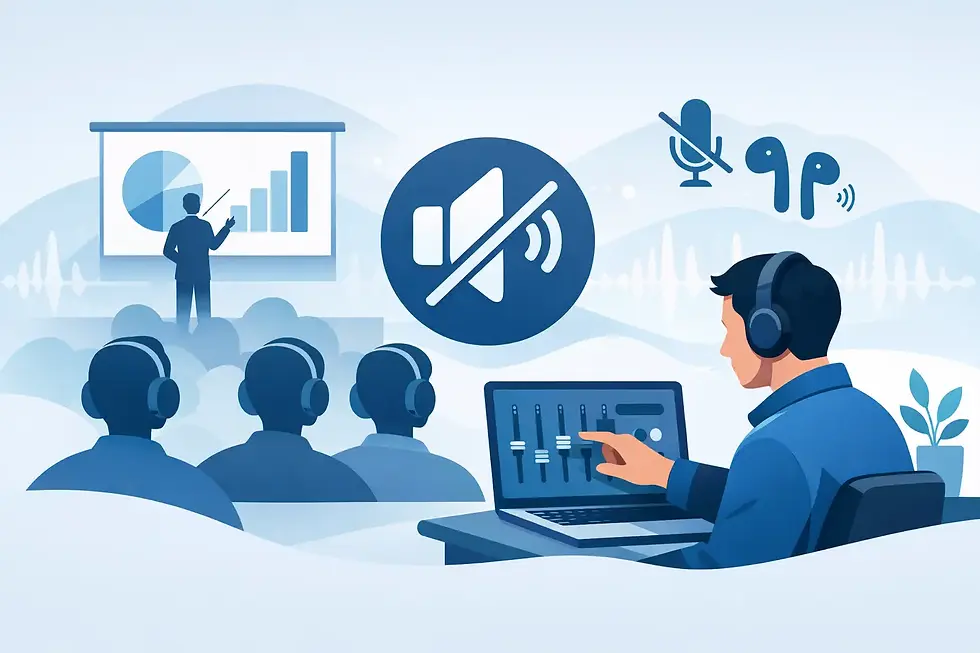
At its core, the system creates a private audio path between the interpreter and the listener. The presenter speaks, the interpreter translates in real time, and attendees hear the translated feed through receivers and headsets. The room stays quiet, the presentation stays on track, and each guest hears the language they need.
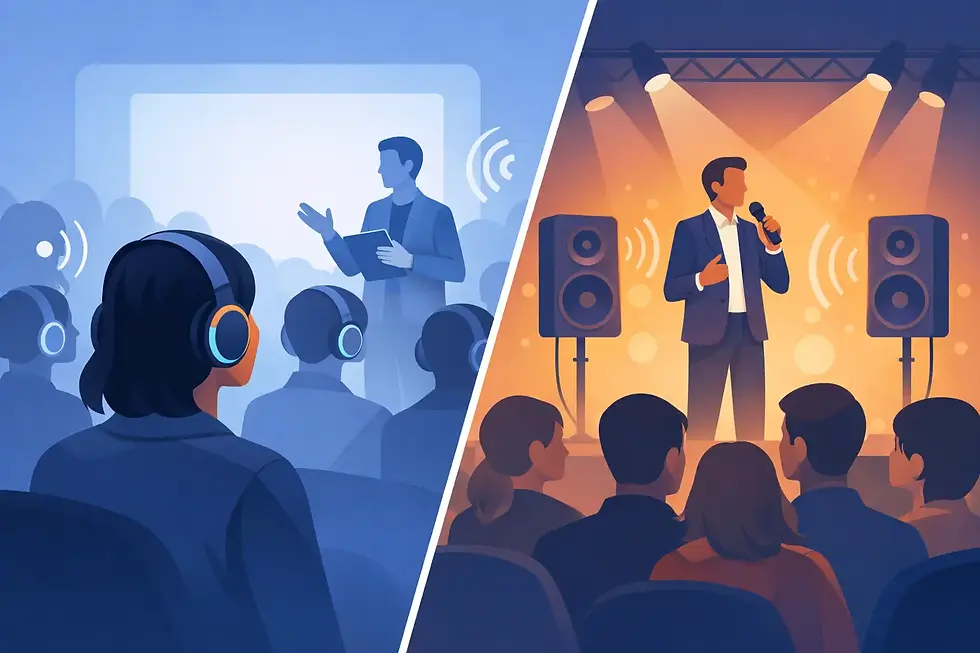
That matters because standard PA audio is built to fill a room, not to deliver multiple language channels cleanly. Once you need English on the floor, Spanish for one group, and perhaps another language for VIP guests or international buyers, a loudspeaker-only setup stops being efficient.
A portable system is built for flexibility. It can be deployed in ballrooms, meeting rooms, expo halls, hotel spaces, temporary activation sites, and other event environments where fixed interpretation infrastructure is not available or simply not practical.
Why event teams choose portable over permanent systems
Most events are temporary by nature. You may be loading in for one day, one weekend, or a short run of presentations inside a venue that hosts multiple programs at once. In those cases, portability is a major advantage.
A portable interpretation setup moves with the event. It can be configured around your room layout, session schedule, interpreter position, and expected audience size. That gives planners more control than relying on a venue's limited in-house options, especially when those options are outdated, incomplete, or tied to one room.
There is also the issue of speed. Event teams need systems that can be deployed, tested, and managed without slowing down the rest of production. A well-planned portable solution keeps setup efficient while still giving attendees a polished listening experience.
Where a portable interpretation system works best
Conferences are the obvious use case, but they are far from the only one. Trade shows often need multilingual support for booth presentations, buyer meetings, and product demos where surrounding floor noise makes communication difficult. A portable interpretation system helps exhibitors speak to international audiences without competing with the entire exhibit hall.
Corporate meetings and investor events benefit as well, especially when clear communication affects compliance, reputation, or decision-making. In those rooms, accuracy matters. Guests should not be straining to hear a translator over HVAC noise, hallway traffic, or a neighboring session.
The same applies to training sessions, guided tours, retail activations, community events, and sporting environments with multilingual attendees or participants. If the message needs to reach specific listeners clearly, private audio delivery usually performs better than trying to push everything through open speakers.
The real operational benefits
The first benefit is clarity. Listeners hear the translated message directly in their headset instead of trying to piece it together from distant speakers or improvised methods. That improves comprehension and reduces fatigue during longer sessions.
The second benefit is control. Portable interpretation systems let you separate language feeds from the room mix. That means your main presentation can stay focused for the primary audience while secondary language groups receive what they need without disrupting anyone else.
The third benefit is audience experience. Guests feel considered when language access is handled professionally. That affects engagement, dwell time, and overall perception of the event. If attendees can follow the content easily, they stay present.
There is also a practical accessibility angle. While interpretation and assisted listening are not the same service, they often overlap in event planning. A provider that understands controlled audio distribution can help you think through both needs in a coordinated way.
What to look for in a portable interpretation system for events
Not every system is right for every room. The best choice depends on the event format, audience size, venue conditions, and how many languages you need to support.
Start with coverage and reliability. In a crowded venue, wireless performance matters. You need stable signal delivery across the intended listening area without dropouts or interference. That becomes even more important in convention centers and multi-room properties where RF conditions can be unpredictable.
Audio quality is next. If the translated feed is thin, noisy, or inconsistent, the system works against the event. Interpreters need clean input audio, and listeners need clear output. The goal is simple - make the translated message easy to understand the first time.
Receiver quantity and channel management also matter. Some events only need one translated language. Others require several. Your setup should match the scale of the session without becoming complicated for staff or attendees to use.
Then there is logistics. Distribution, collection, charging, sanitization, spare units, and on-site troubleshooting all affect whether the system feels smooth in practice. Event technology should reduce friction, not create another operations problem.
Portable does not mean one-size-fits-all
This is where many event teams run into trouble. They assume interpretation is just a matter of handing out headsets. In reality, the success of the system depends on how it is configured around the event.
A general session with 500 attendees has different needs than a breakout room for 40 international delegates. A trade show booth demo has different constraints than a city tour, factory visit, or bilingual press conference. Interpreter placement, presenter microphones, room acoustics, and audience flow all shape the setup.
There are also trade-offs. Fully portable systems are flexible, but they still need smart planning around battery life, channel coordination, and attendee handling. If the event has constant audience turnover, you need a clear check-in and return process. If the venue is unusually noisy or spread out, you may need a broader audio strategy around the interpretation system itself.
That is why a consultative approach matters. The right provider does more than supply gear. They help match the system to the event so your team is not solving audio problems during show hours.
Common mistakes planners can avoid
One common mistake is waiting too long. Interpretation support often gets discussed late, after the agenda is already built and room plans are nearly final. By that point, there may be fewer options for interpreter positions, audio routing, and attendee distribution.
Another mistake is underestimating the venue. A hotel ballroom may seem straightforward, but nearby sessions, concrete walls, exhibit traffic, and shared wireless conditions can all affect performance. What works in a quiet boardroom may not work on an active event floor.
Some teams also focus only on equipment count and not on user experience. If guests do not know where to pick up a receiver, how to select a channel, or where to return the unit, the system becomes harder to use than it should be. Clear event-day support makes a real difference.
Why service support matters as much as the hardware
Interpretation audio is a live service environment. The equipment matters, but execution matters more. You need clean setup, tested channels, organized distribution, and immediate help if something changes during the event.
That is why many planners prefer working with an event audio partner instead of sourcing devices alone. With the right team, the system is configured for the room, integrated into the run of show, and supported by people who understand live event pressure. Your Event Audio approaches these projects exactly that way - as targeted communication solutions built around the event, not off-the-shelf boxes dropped at the door.
When it is the right investment
If your audience includes multilingual attendees, international guests, bilingual speakers, or content that must be understood clearly across languages, a portable interpretation system usually pays for itself in audience retention and event quality. It helps protect the value of the content you are already investing in.
It is especially worthwhile when the room is noisy, the schedule is tight, or the stakes are high. In those settings, hoping people can follow along is not a communication plan.
The best event audio choices are the ones your audience barely notices because everything simply makes sense. When people hear the right message in the right language without distraction, they stay engaged, your presenters stay effective, and the event works the way it was meant to.

Comments