
Presenter Audio Monitoring for Live Events
A presenter can have the right slides, the right script, and the right audience, then lose the room because they cannot hear what matters. Presenter audio monitoring for live events solves that problem fast. It gives speakers, emcees, panelists, and on-floor teams a controlled audio feed they can actually rely on, even when the venue is loud, the schedule is tight, and multiple sound sources are competing for attention.
That matters more than most event plans account for. In a ballroom, trade show hall, retail activation, or sports venue, presenters are often working against crowd noise, delayed house audio, off-axis speakers, and changing run-of-show cues. If they miss a cue, talk over a video, repeat a line, or lose timing with the production team, the audience notices. Good monitoring keeps the presenter locked in and keeps the event moving.
What presenter audio monitoring for live events actually does
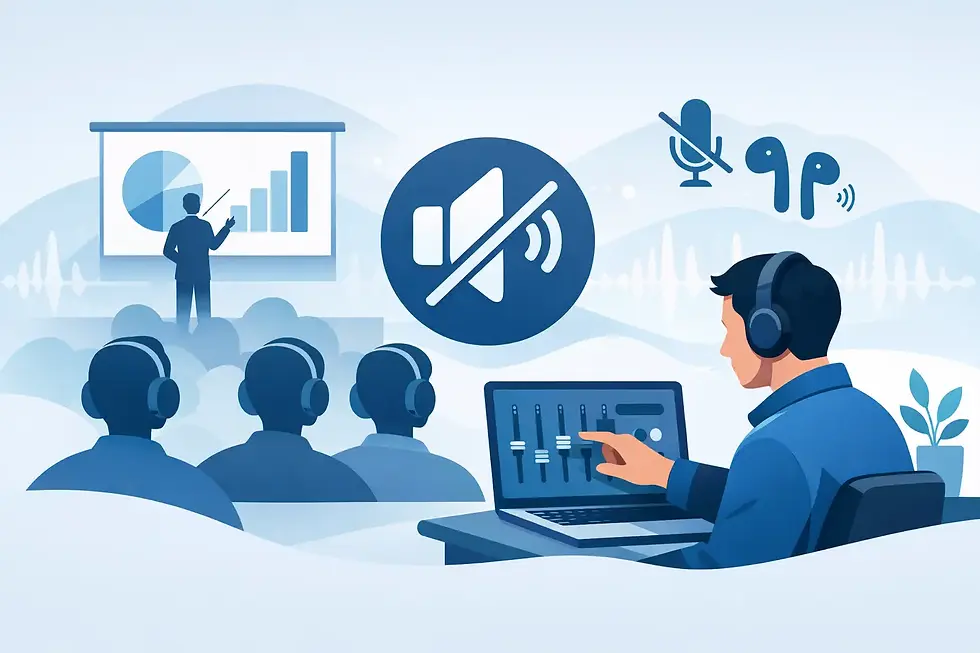
At the most practical level, monitoring gives the presenter a dedicated way to hear the information they need without depending on the room. That might include program audio, cueing from a producer, translation feeds, remote callers, video playback, or confidence support for an emcee moving through a noisy venue.
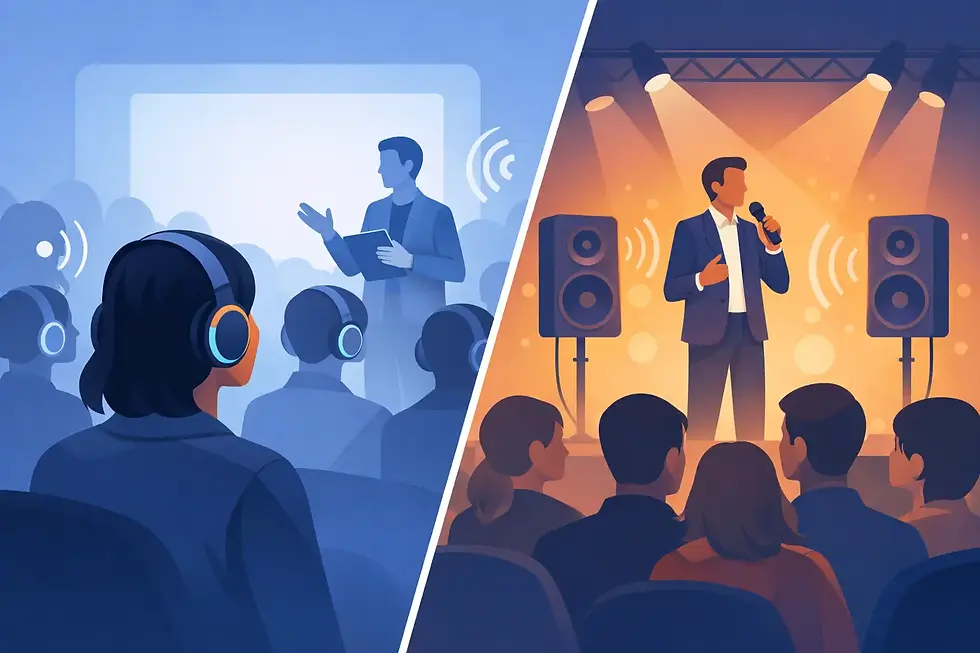
This is different from standard front-of-house sound. House speakers are designed for the audience. Presenter monitoring is designed for control. The goal is not to make the room louder. The goal is to deliver the right audio to the right person at the right level, without bleed, confusion, or guesswork.
For some events, that means a single presenter wearing an earpiece to receive stage cues. For others, it means a panel moderator hearing remote participants clearly while the audience hears a mixed feed. In a trade show environment, it may mean booth staff and presenters monitoring their own content on wireless receivers so they can stay on message even when neighboring exhibitors are pushing volume.
Why standard PA systems are not enough
A PA system does one job well - it projects sound outward. It does not always give the presenter a clean reference point.
That gap shows up in predictable ways. Presenters start speaking too loudly because they cannot hear themselves. They pause at the wrong time because cue audio is muddy. A remote guest starts talking, but the panelist misses the first sentence. An emcee walks into a crowded area and loses contact with the production flow. None of these issues look dramatic on a gear list, but they affect audience confidence immediately.
In busy environments, relying on room sound alone is risky. Large venues create distance and delay. Trade show floors create constant overlap. Outdoor events add wind, crowd movement, and inconsistent speaker coverage. Retail and brand activations often operate in shared public spaces where blasting volume is not even an option. Monitoring fills that operational gap.
Where presenter audio monitoring matters most
The need is strongest in environments where clarity and timing are harder to control.
At conferences, moderators and keynote speakers often need discreet cues, playback reference, or support for hybrid segments. During panel discussions, monitoring helps keep live and remote participants aligned. It also reduces the awkward moments that happen when someone on stage simply cannot hear the question.
At trade shows, the challenge is usually noise competition. Nearby booths, overhead announcements, and constant foot traffic make it difficult for presenters to maintain pace and confidence. A dedicated monitored feed helps them deliver on schedule and stay consistent across repeated presentations.
For brand activations and retail events, monitoring is useful when the presenter is mobile. If an emcee is moving through a crowd, leading demos, or coordinating timed promotions, a wireless monitoring solution keeps communication direct without turning the venue into a wall of sound.
Sports and promotional events add another layer. Timing is tighter, cues are faster, and the presenter may be working alongside music, announcements, sponsor reads, and live audience interaction. In those moments, hearing clearly is not optional.
Choosing the right presenter audio monitoring setup
There is no one-size-fits-all setup, because the right solution depends on how the event moves.
If the presenter is stationary on stage, an in-ear monitor or discreet wireless receiver may be enough. If they are walking the floor or working across multiple zones, mobility and signal stability matter more. If the event includes multilingual audio, separate monitored channels may be needed for interpreters, presenters, or support staff. If there are multiple presentations happening near each other, channel coordination becomes critical.
Comfort matters too. A technically correct system that a presenter does not want to wear is not the right system. Some speakers prefer a low-profile earpiece. Others need a more secure fit because they are active on stage. Some want producer cues only. Others need a blend of program audio and cueing so they can match pacing naturally.
The best setups are built around the event workflow, not around a fixed equipment package.
Audio source planning matters as much as hardware
A common mistake is focusing only on transmitters and receivers while ignoring the actual feed structure. What does the presenter need to hear? Their own mic for confidence? Video playback? Stage manager cues? Remote contributors? A backup feed if one source drops?
Those decisions shape the quality of the experience. Too much information in the ear becomes distracting. Too little leaves the presenter exposed. Clean source planning keeps the feed useful instead of cluttered.
RF coordination and venue conditions cannot be an afterthought
Wireless monitoring works best when the radio environment is managed properly. Trade shows, convention centers, and large event venues are often packed with wireless devices. If frequencies are not coordinated, dropouts and interference can appear at exactly the wrong moment.
That is why event-ready monitoring is not just a matter of bringing gear. It requires scanning, coordination, backup planning, and real testing in the actual venue conditions.
Presenter audio monitoring for live events and audience experience
This is not only a presenter benefit. It improves the audience experience in visible ways.
When presenters can hear cueing and content clearly, pacing improves. Transitions are tighter. They stop stepping on playback. They respond faster to timing adjustments. They sound more confident because they are more confident.
It also helps keep event audio controlled. Instead of increasing room volume to solve every clarity problem, you can target audio where it is needed. That reduces spill into neighboring spaces, which is especially valuable in multi-use venues and exhibit halls.
For planners, this creates a better operating environment. Fewer missed cues. Less on-stage confusion. Better coordination between production, presenters, and support staff. The event feels polished because communication is polished.
Common trade-offs to think through
The right monitoring plan usually involves choices, not absolutes.
An open speaker monitor may feel simple, but it can add stage noise and reduce control. An in-ear system offers privacy and precision, but some presenters need time to get comfortable with it. A single shared cue mix may be easy to manage, but it may not give each role the exact information they need. A more customized setup improves performance, but it also requires better planning and operator support.
That is why the best approach starts with use case, not assumptions. A keynote speaker, roaming emcee, bilingual moderator, and trade show product demonstrator do not all need the same solution.
What to ask before event day
Before locking in audio, planners should answer a few operational questions. Who needs monitoring? What do they need to hear? Will they stay in one place or move? Are there multiple sessions nearby? Is there remote participation? Are there accessibility or multilingual requirements? Who is managing cueing during the show?
These answers affect equipment, channel count, routing, staffing, and rehearsal time. They also help avoid the last-minute fix that usually costs more and works worse.
A consultative audio partner can map these needs early and build a system that supports the actual event, not just the stage diagram. That is where custom closed-circuit and wireless solutions make a measurable difference.
Why custom support matters
Presenter audio monitoring is one of those services that looks simple until the event gets complicated. On paper, it is just a feed to an earpiece. In practice, it sits at the intersection of RF management, cue flow, presenter comfort, content timing, and venue constraints.
That is why professional support matters. Your Event Audio works with event teams to configure monitoring around real-world use cases, whether the need is a single presenter feed or a more complex multi-channel setup across a noisy venue. The result is clearer communication, tighter show control, and an audience experience that feels intentional.
If your presenters need to hear clearly in order to perform clearly, monitoring should not be treated as an add-on. It should be part of the event plan from the start. When the person with the mic can hear what they need, the whole event works better.

Comments