
Retail Activation Audio Solutions That Work
A retail activation can look sharp on paper and still fall flat on the floor. The display is on-brand. The staffing is solid. The offer is clear. But if customers cannot hear the message, if staff have to shout over music and foot traffic, or if nearby tenants complain about spillover, the experience breaks down fast. That is where retail activation audio solutions make a measurable difference.
In busy retail environments, audio is not just background support. It is part of how the activation functions. It helps a brand deliver product stories, guide traffic, support presenters, manage timing, and keep communication controlled inside a space that was never designed for quiet, focused listening.
Why retail activation audio solutions matter on the sales floor
Retail spaces are full of competing sound sources. Store music, neighboring activations, mall announcements, crowd noise, and reflective surfaces all make communication harder. A standard speaker on a stand can add volume, but volume alone does not solve clarity.
The real goal is directed listening. A customer should hear the right message in the right place without turning the activation into a noise problem for the rest of the venue. That is especially true for product demos, timed promotions, influencer appearances, and branded experiences built around education or interaction.
For activation teams, the stakes are practical. If people miss the offer, the demo instructions, or the call to action, conversion suffers. If the environment gets too loud, staff fatigue goes up and venue friction follows. Good audio keeps the activation effective without making it disruptive.
What effective retail activation audio solutions actually do
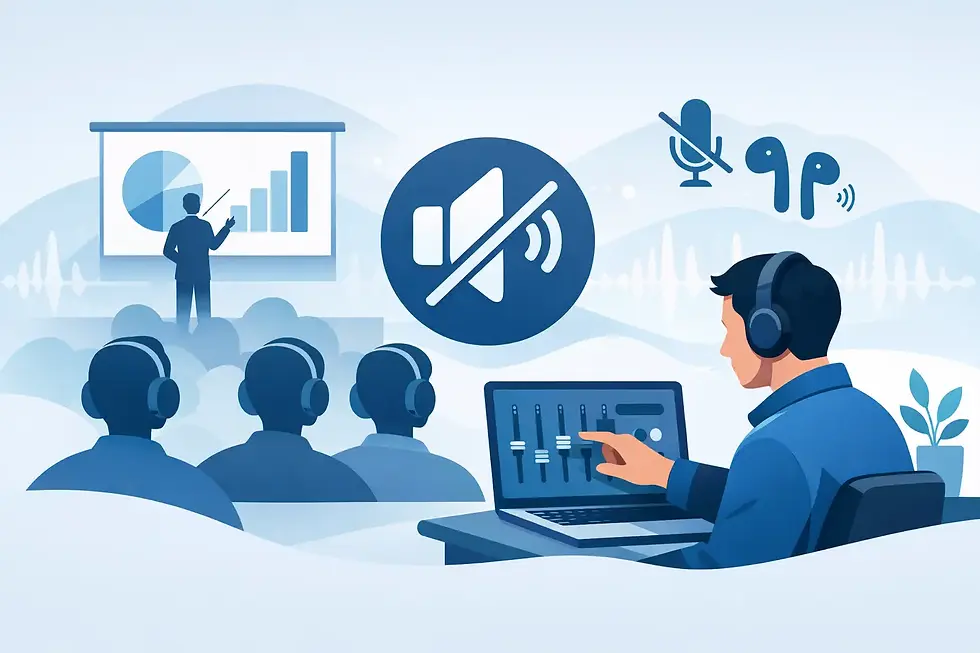
The strongest setups are built around control, not just amplification. That usually means using closed-circuit or wireless listening options when open-air sound is not enough or not appropriate.
In some activations, a presenter needs to speak directly to engaged shoppers while ambient noise stays high. In others, multiple brand messages need to run side by side without bleeding into each other. There are also situations where accessibility matters just as much as marketing, such as assisted listening for customers who need extra support in understanding spoken content.
A well-designed system can support live emcee audio, pre-recorded messaging, staff communication, DJ integration, multilingual channels, private listening zones, and customer-facing announcements. The right mix depends on the footprint, audience flow, content format, and venue restrictions.
That is why off-the-shelf gear often underperforms. Retail activations are temporary, high-pressure environments. Equipment has to be fast to deploy, easy to manage, and reliable under real event conditions.
Matching the audio setup to the activation
There is no single format that fits every retail campaign. A cosmetic brand launch in a department store needs a different audio strategy than a sneaker drop in a mall concourse or a beverage sampling event inside a big-box retailer.
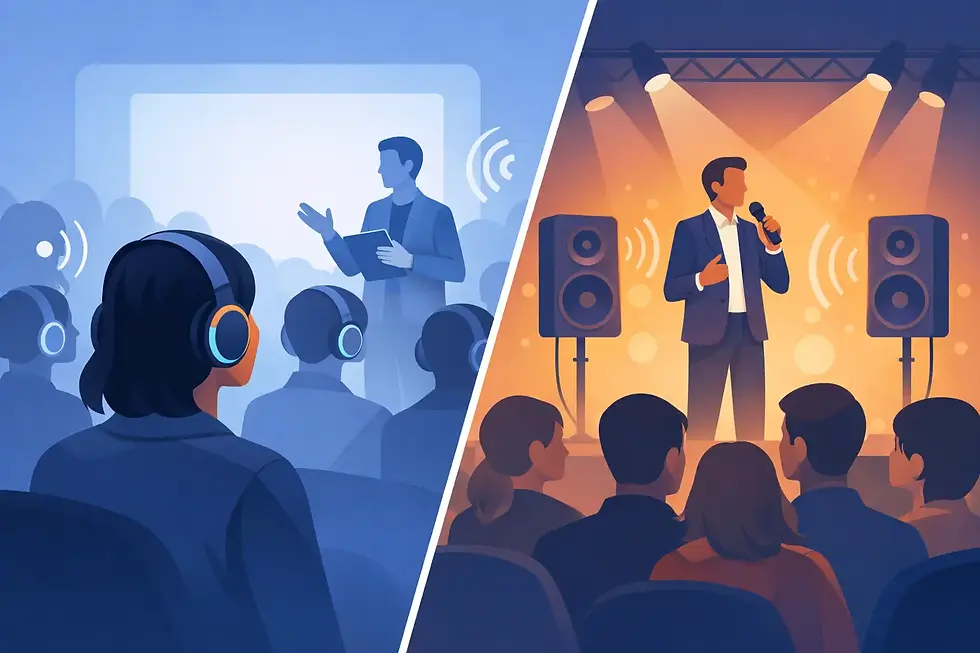
Open-air sound for broad attraction
If the goal is to pull people in from nearby traffic, open-air speakers still have a place. They can create energy, support a host, and make the activation feel alive. But they need tight control. Too little coverage and the message gets lost. Too much coverage and the activation spills beyond its footprint.
This is where speaker placement, volume tuning, and microphone choice matter more than most teams expect. The issue is rarely whether sound is present. It is whether speech stays intelligible once the room fills up.
Closed-circuit listening for focused engagement
When clarity matters more than reach, closed-circuit audio is often the better answer. Wireless headsets let attendees hear a presenter, product expert, or brand ambassador directly, even when the surrounding area is loud.
This approach works especially well for guided demos, premium product storytelling, wellness activations, tech showcases, and any format where the details matter. It also reduces sound bleed, which can be a major advantage in shared retail environments.
There is a trade-off. Headset-based experiences are more intentional. They work best when staff are actively inviting participation rather than relying on passive walk-by attention. For many brands, that is a worthwhile exchange because the people who opt in tend to be more engaged.
Multi-channel audio for layered experiences
Some activations need more than one audience path at the same time. A bilingual presentation, separate staff and guest feeds, or multiple demo stations running side by side all benefit from multi-channel audio.
This is where custom configuration pays off. Instead of forcing every listener into the same audio experience, the system can be structured around how the activation actually runs. That reduces confusion and gives producers more flexibility without expanding the noise footprint.
Common problems retail teams run into
Audio issues at activations are rarely dramatic at first. More often, they show up as friction. Staff repeat themselves constantly. The emcee sounds clear during rehearsal but muddy once the crowd gathers. A great presenter loses attention because people on the edge cannot follow along. Store management starts asking for lower volume halfway through the event.
These are operational problems, not cosmetic ones. They affect dwell time, customer understanding, and staff performance.
Another common issue is underestimating how different the venue sounds once the activation goes live. Hard floors, glass storefronts, ceiling height, and surrounding tenants all shape the listening experience. What works in a quiet test does not always work at opening traffic.
That is why planning should include more than a gear list. It should account for audience movement, presenter style, message length, power access, load-in limitations, and who will manage the system during live hours.
What planners should look for in a provider
Retail activation audio solutions should be easy to run on event day, but getting there takes expertise. The best provider is not just renting equipment. They are helping the team decide what kind of listening experience the activation needs.
That starts with questions. Is the goal to attract a crowd, educate a smaller audience, or support both at once? Will there be live presenters, DJs, or scheduled announcements? Does the venue have strict limits on noise spill or setup footprint? Are there accessibility or multilingual requirements?
A good partner will translate those answers into a workable system, not a generic package. They should also think through staffing, charging, signal stability, microphone handling, and contingency planning. Retail activations move fast, and there is not much room to troubleshoot in front of customers.
For brands and agencies running national campaigns, consistency matters too. The audio experience should be repeatable across locations while still adapting to different store formats and local conditions.
Where audio creates the biggest return
Not every activation needs complex production. But many would perform better with smarter sound design.
Audio has the biggest payoff when the brand message depends on explanation, when the environment is noisy, when multiple programs are happening nearby, or when the customer experience is meant to feel curated rather than chaotic. It also matters when staff communication and presenter confidence are part of the event outcome.
Clear audio supports stronger engagement because it lowers the effort required to participate. People stay longer when they can follow what is happening. Staff work more effectively when they are not fighting the room. Venue partners are easier to work with when the activation stays controlled.
That combination matters. A retail activation is not judged only by traffic. It is judged by how well it converts attention into action.
Retail activation audio solutions should fit the environment
The best systems do not call attention to themselves. They make the activation feel easier to join, easier to hear, and easier to manage.
That usually means resisting one-size-fits-all setups. A compact in-store demo may need private wireless listening and a single host mic. A larger public-facing launch may need a blend of crowd-attract audio, presenter support, and controlled messaging zones. Both are valid. The right choice depends on the experience you are trying to create and the constraints of the venue.
At Your Event Audio, that is the focus: building audio around the communication job the activation needs to do. Not louder for the sake of louder. Clearer, more targeted, and easier to control.
If your next retail activation needs to cut through noise without adding more of it, start with the listening experience you want customers to have. The right audio plan tends to sharpen everything else around it.

Comments