
Silent Conference Headset System Guide
A silent conference headset system changes the way people experience live content the moment the room gets noisy, crowded, or divided into multiple conversations. If you are running a conference in a trade show hall, a hotel breakout area, a retail activation, or any shared venue where open-air speakers are not enough, this setup gives your audience direct, controlled audio without competing with the room.
That matters more than most planners expect. Good content gets ignored when attendees cannot hear it clearly. Speakers lose momentum. Sessions bleed into each other. Staff scramble to fix a problem that was built into the environment from the start. A headset-based wireless system solves that at the source by delivering clear audio straight to each listener.
What a silent conference headset system actually does
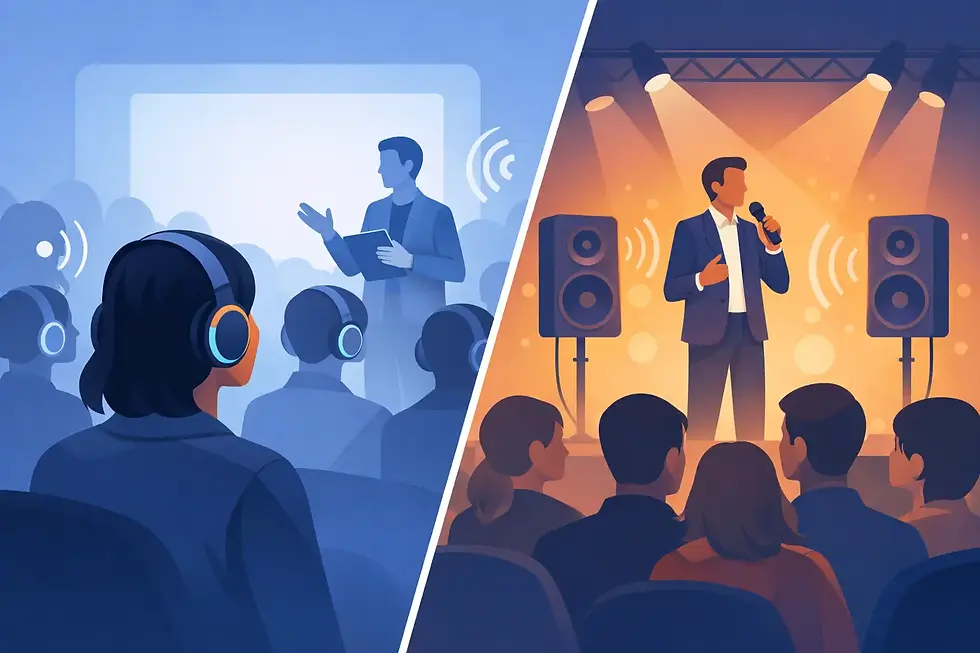
At its core, a silent conference headset system sends a live audio feed from your presenter, moderator, interpreter, or media source directly to wireless headsets worn by attendees. Instead of pushing sound into the room through PA speakers, the system creates a private listening experience for each participant.
For event organizers, the practical advantage is control. You decide who hears what, where they hear it, and how many channels need to run at the same time. That can mean one keynote in a loud environment, three simultaneous breakout sessions in the same footprint, or multilingual interpretation for a general session where the room itself still needs to stay quiet.
The best systems are simple for attendees to use. They put on a headset, select the assigned channel if needed, and listen. No app download. No phone battery issue. No fighting venue acoustics.
Where silent conference headset systems work best
This type of system is not for every event, and that is exactly why it is valuable. It works best in spaces where traditional sound reinforcement creates more problems than it solves.
Trade shows are one of the clearest examples. Booth presentations compete with neighboring exhibitors, ambient floor noise, and constant movement. A presenter may have strong content, but if attendees are straining to hear, engagement drops fast. A headset system keeps the message focused and contained.
Multi-track conferences also benefit. If you need to run several presentations in one ballroom or expo area, open speakers can create overlap and distraction. With separate audio channels, each audience can follow its own session without hearing the others.
It also makes sense in venues with sound restrictions. Museums, historic sites, mixed-use spaces, and active retail environments often cannot support loudspeaker-based presentation audio at the level a crowd needs. Headsets let you maintain clarity without raising the room volume.
There is also a strong accessibility and inclusion case. Attendees who struggle with background noise often do better with direct audio delivery. If your event includes interpretation, assisted listening, or presenter-specific audio zones, the system gives you cleaner execution than trying to patch together multiple audio approaches.
Why planners choose a silent conference headset system
The headline benefit is clear audio, but the operational value goes further than that.
First, you cut through the noise. That sounds obvious, but it affects more than audience comfort. It improves retention, Q and A quality, presenter confidence, and overall session flow. People stay engaged longer when they can actually hear every word.
Second, you reduce sound bleed. In shared venues, one session can easily interfere with another. Headsets keep each presentation contained, which protects the attendee experience across the whole event.
Third, you gain flexibility. A silent conference headset system can support panel discussions, guided tours, training sessions, product demos, multilingual content, and private listening zones. One platform can serve several event goals if it is configured correctly.
Fourth, you avoid overbuilding your PA. Some events do need room sound reinforcement. Others need targeted listening more than loud coverage. Choosing headsets where they make sense can save space, simplify floor plans, and reduce acoustic headaches.
What to consider before you book a system
Not every headset setup is equal, and not every event needs the same deployment. The right solution depends on your room, schedule, content format, and attendee flow.
Start with audience size. A 40-person leadership session and a 400-person expo theater require different inventory planning, headset distribution, charging logistics, and onsite support. If attendance is fluid, you also need a cushion for walk-ups and headset turnover.
Then look at channel count. One live audio stream is straightforward. Multiple sessions running side by side need a channel plan that is easy for guests to understand. If you are adding language interpretation, channel organization becomes even more important.
Presenter format matters too. A single keynote mic is not the same as a moderated panel, live Q and A, video playback, and remote guest audio. The system should be built around your actual program, not a generic package.
Venue conditions also change the setup. RF environment, room layout, distance between stages, backstage needs, and check-in points all affect performance and staffing. In a busy convention center, details that seem small on paper can affect reliability in real time.
Finally, think about user management. How will headsets be handed out, collected, cleaned, recharged, and reassigned? For short sessions, turnover speed matters. For all-day use, comfort and battery life matter more. A good provider plans for both.
Silent conference headset system vs traditional PA
This is not a question of which option is better overall. It is a question of which option fits the job.
Traditional PA is the right choice when you need room-filling audio for a shared audience, public announcements, or entertainment intended to energize the whole space. If the goal is collective sound in an acoustically appropriate room, speakers still make sense.
A silent conference headset system is the better fit when the goal is precision. If you need private listening, multiple concurrent sessions, lower room volume, or better speech intelligibility in a noisy setting, headsets usually outperform open-air sound.
In some events, the strongest approach is hybrid. You may use a PA for staging, walk-in music, and room announcements, then route session content to attendee headsets. That balance works well when you need both atmosphere and intelligibility.
Common event use cases
Conference planners often use headset systems for breakout zones that do not have full walls or dedicated meeting rooms. It lets them expand programming without expanding venue footprint.
Trade show producers use them for booth theaters, education stages, and sponsored presentations where exhibitors need to capture attention without violating venue sound policies.
Brand activation teams use them for guided product storytelling in loud public environments. Instead of asking guests to gather around a speaker and hope they can hear, they create a controlled branded experience.
Venue operators use them when several groups need audio support in the same building at the same time. Retail and mixed-use spaces use them when public volume must stay low while content still needs to be heard clearly.
Why service matters as much as the equipment
A silent conference headset system can look simple from the audience side, but event delivery depends on planning and support. Frequency coordination, signal reliability, headset management, presenter integration, and onsite troubleshooting all affect results.
That is why a service-based approach matters. You want a partner who asks how your sessions actually run, where congestion points will happen, how attendees move through the space, and whether your team needs managed distribution or a self-serve setup. The gear matters, but the deployment matters more.
Your Event Audio approaches these systems the same way it approaches every closed-circuit audio solution - as a custom fit for the event, not a one-size-fits-all rental. That is usually the difference between a setup that simply turns on and a setup that helps the event perform better.
Is a silent conference headset system right for your event?
If your audience needs to hear clearly in a noisy, shared, or acoustically difficult space, the answer is often yes. If you are managing multiple presentations at once, supporting interpretation, or trying to hold attention in a high-distraction environment, it becomes even more compelling.
The trade-off is that headset systems require planning. You need inventory, distribution, sanitation, charging, and attendee guidance. But for the right event, that extra coordination pays off quickly in better engagement, cleaner communication, and fewer audio complaints.
If you are weighing options, start with a practical question: do you need louder sound, or do you need more controlled sound? That answer usually points you in the right direction.


Comments